Melamine vs Plywood in Malaysia: Which Is Better? Complete Guide (2026)
Melamine vs plywood — it is the most common material decision Malaysian homeowners face during a renovation. Whether you are building kitchen cabinets for your condo, wardrobes for your landed home, or a full built-in setup across your Klang Valley property, choosing between melamine and plywood affects your budget, durability, and final result. This guide covers everything you need to know to make the right choice in 2026.
Key takeaways
Melamine costs 30–50% less than furniture-grade plywood and requires virtually no maintenance — ideal for budget-conscious renovations.
Plywood is structurally stronger, holds screws firmly, and can be shaped — making it the better choice for doors, drawer fronts, and high-stress areas.
Most designers recommend a hybrid approach: melamine carcasses with plywood doors for the best balance of cost and durability.
What Is Melamine Wood?
Melamine wood, also known as melamine-faced board (MFB), is a composite material made from particleboard or MDF coated with a melamine resin-impregnated decorative paper layer. This creates a smooth, durable surface that resists scratches, stains, and moisture remarkably well.
Advantages of melamine
- •Cost-effective — typically 30–50% cheaper than furniture-grade plywood in Malaysia
- •Huge variety — hundreds of colours and patterns, from solid whites to convincing wood grain textures
- •Low maintenance — a quick wipe with a damp cloth keeps it pristine for years
- •No finishing required — no sealing, polishing, or refinishing needed
Limitations of melamine
- •Cannot be easily repaired if the surface chips or delaminates
- •Exposed edges require edgebanding to prevent moisture damage
- •Heavier than plywood of the same thickness
- •Weak screw retention — repeated disassembly weakens joints, so treat melamine furniture as semi-permanent
What Is Plywood?
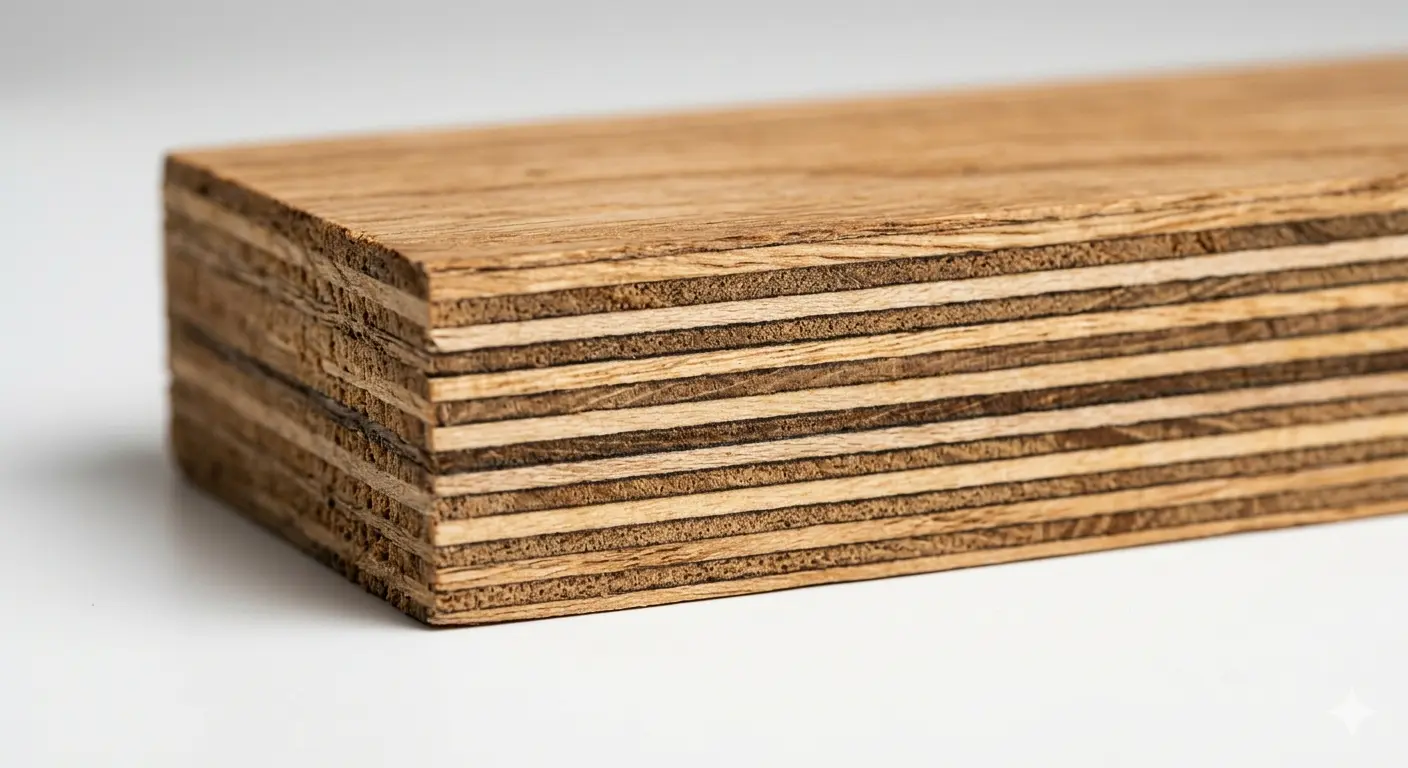
Plywood is constructed from thin layers of wood veneer (plies) glued together with each layer oriented perpendicular to the one below it. This cross-grain construction gives plywood exceptional strength and dimensional stability — it resists warping, shrinking, and cracking far better than solid wood.
Advantages of plywood
- •Excellent screw retention — holds fasteners firmly even after repeated use
- •Higher load capacity — supports heavier loads than melamine
- •Can be shaped and routed — far more versatile for custom designs
- •Natural wood appearance — warmer and more authentic than melamine's printed surface
Trade-offs of plywood
Furniture-grade plywood requires finishing — whether laminate, veneer, paint, or a clear coat — which adds material cost and labour time. Unfinished plywood is also more susceptible to moisture damage than melamine, making proper sealing essential in humid Malaysian climates, particularly in kitchens and bathrooms.
Melamine vs Plywood: Quick Comparison Table
Here is a side-by-side comparison of melamine and plywood across every factor that matters for Malaysian renovations:
| Feature | Melamine | Plywood |
|---|---|---|
| Cost per sqft | RM 4–8 (particleboard core) | RM 10–25 (furniture-grade) |
| Durability | Scratch and stain resistant surface | Stronger structure, holds screws better |
| Moisture resistance | Good (factory-sealed surface) | Needs proper sealing or laminate |
| Heat resistance | Moderate — can delaminate near stoves | Good — withstands heat better |
| Weight | Heavier at same thickness | Lighter and easier to handle |
| Appearance options | Hundreds of printed colours and patterns | Natural wood grain, can be veneered |
| Typical lifespan | 8–12 years | 15–25 years with proper finishing |
| Repairability | Difficult — chips are permanent | Can be sanded and refinished |
| Best use cases | Cabinet interiors, shelving, wardrobes | Doors, drawer fronts, feature furniture |
Melamine vs Plywood Price in Malaysia
Material pricing is one of the biggest factors for Malaysian homeowners. Here is what you can expect to pay in 2026:
Melamine-faced board (MFB):
- •Standard particleboard core (16mm): RM 80–120 per sheet (4×8 ft)
- •MDF core melamine (18mm): RM 120–160 per sheet
- •Premium textured melamine: RM 140–200 per sheet
Plywood:
- •Commercial-grade plywood (12mm): RM 80–110 per sheet
- •Furniture-grade plywood (18mm): RM 150–250 per sheet
- •Marine-grade plywood (18mm): RM 250–350 per sheet
Keep in mind that plywood requires additional finishing — laminate, veneer, or paint — which adds RM 5–15 per sqft in labour and material. Melamine needs no finishing, so the total installed cost difference is often 20–40% in melamine's favour for cabinet carcasses.
Which Is Better for Malaysian Weather?
Malaysia's tropical climate — with average humidity of 70–90% and temperatures above 30°C year-round — puts unique stress on furniture materials. Here is how each performs:
Melamine in humid conditions: The factory-sealed melamine surface acts as a moisture barrier, preventing the core from absorbing ambient humidity. However, exposed edges and drill holes are vulnerable. Proper edgebanding and sealing all cut edges is essential — especially in kitchens and bathrooms where water splashes are common.
Plywood in humid conditions: Plywood's cross-grain construction gives it natural dimensional stability, meaning it resists warping better than solid wood. However, unfinished plywood will absorb moisture over time, leading to swelling and delamination. In wet areas like kitchens, marine-grade plywood or properly sealed furniture-grade plywood is recommended.
The verdict for Malaysian homes: For enclosed cabinet interiors, melamine's sealed surface handles humidity well out of the box. For exposed surfaces, doors, and structural elements, properly finished plywood is more durable long-term. In both cases, ensure good ventilation in your kitchen and wardrobe spaces — trapped moisture damages any material eventually.
Melamine vs Plywood for Kitchen Cabinets
Kitchen cabinets are the most common application where this choice matters. Malaysian kitchens face heavy use, cooking grease, steam, and humidity — so material choice directly impacts how long your cabinets last.
For cabinet carcasses (the box): Melamine is the industry standard. Its sealed surface resists cooking oil splatters, spice stains, and moisture. Most kitchen cabinet manufacturers in Malaysia use melamine carcasses as the default, and for good reason — it is practical, affordable, and easy to clean.
For cabinet doors: Plywood doors with laminate or acrylic finishing are more durable for daily use. They hold hinges firmly over years of opening and closing, resist warping from heat near the stove, and can be refinished if damaged. If budget allows, plywood doors are the better long-term investment.
For wet kitchen vs dry kitchen: If your home has a separate wet kitchen (common in Malaysian landed homes), use marine-grade plywood or high-moisture-resistant melamine in the wet kitchen. The dry kitchen can use standard melamine carcasses with plywood or MDF doors.
Also read: Condo Renovation Guide Malaysia 2026 — includes kitchen renovation tips for condo owners.
Melamine Board vs Plywood: What's the Difference?
If you are new to renovation materials, the difference between melamine board and plywood can be confusing — they look similar when finished but are built very differently.
Melamine board is a composite material. The core is made from wood chips (particleboard) or wood fibres (MDF) compressed with resin. This core is then covered with a decorative melamine paper that is heat-pressed onto the surface, creating a hard, smooth finish. Think of it as a sandwich — engineered core with a protective skin.
Plywood is made from thin sheets of real wood veneer stacked and glued together. Each layer (or ply) is oriented perpendicular to the one below it, creating a cross-grain structure that gives plywood its strength. The more plies, the stronger and more stable the board.
The key structural difference: Melamine board has a uniform core with no grain direction, which means it is weaker along edges and does not hold screws as firmly. Plywood's layered construction gives it strength in all directions and excellent screw retention. This is why plywood is preferred for structural components, doors, and anything that needs to bear weight or withstand repeated mechanical stress.
Plywood vs Melamine: Which Should You Choose?
The choice between plywood and melamine comes down to where and how the material will be used in your home. There is no single "better" option — each material excels in different applications.
Choose melamine when:
- •You need to keep renovation costs down without sacrificing appearance
- •The surface will be enclosed (inside cabinets, shelving interiors)
- •You want a wide range of colours and patterns to match your design theme
- •Low maintenance is a priority — no resealing or refinishing needed
Choose plywood when:
- •The piece will be opened, closed, or handled frequently (doors, drawers)
- •It needs to support heavy loads (bookshelves, overhead cabinets)
- •You want a natural wood appearance or plan to apply custom finishes
- •Long-term durability matters more than upfront cost
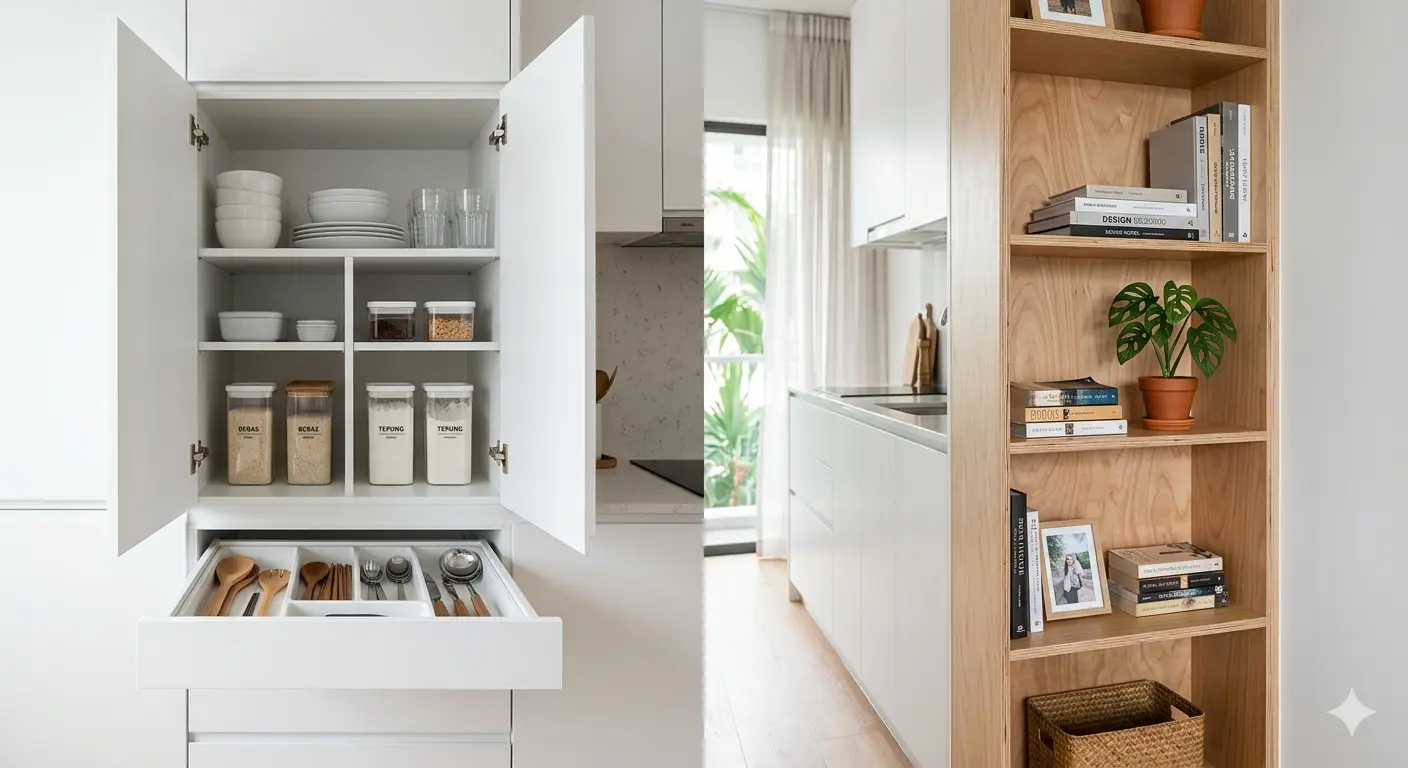
The smart approach: Most experienced interior designers in Malaysia recommend a hybrid strategy — melamine carcasses with plywood doors. This gives you the cost efficiency of melamine where it matters least (hidden interiors) and the durability of plywood where it matters most (visible, high-use surfaces). This approach can save 20–30% compared to using plywood throughout while delivering a result that lasts.
Best Uses for Each Material
Wardrobes and built-ins
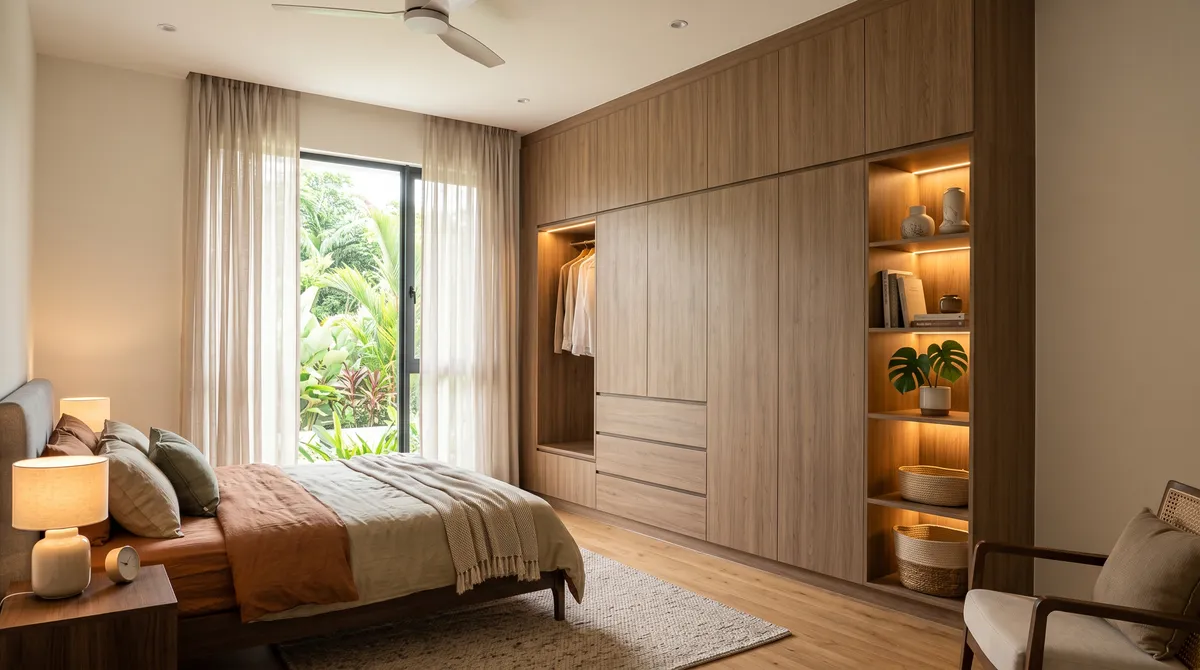
Wardrobes follow similar logic to kitchens: melamine interiors with plywood or MDF doors finished in your chosen style. The melamine interior keeps clothing clean and is easy to wipe down, while the plywood doors provide durability for daily opening and closing. For design ideas, door types, and RM pricing, see our built-in wardrobe guide.
Living rooms and bedrooms
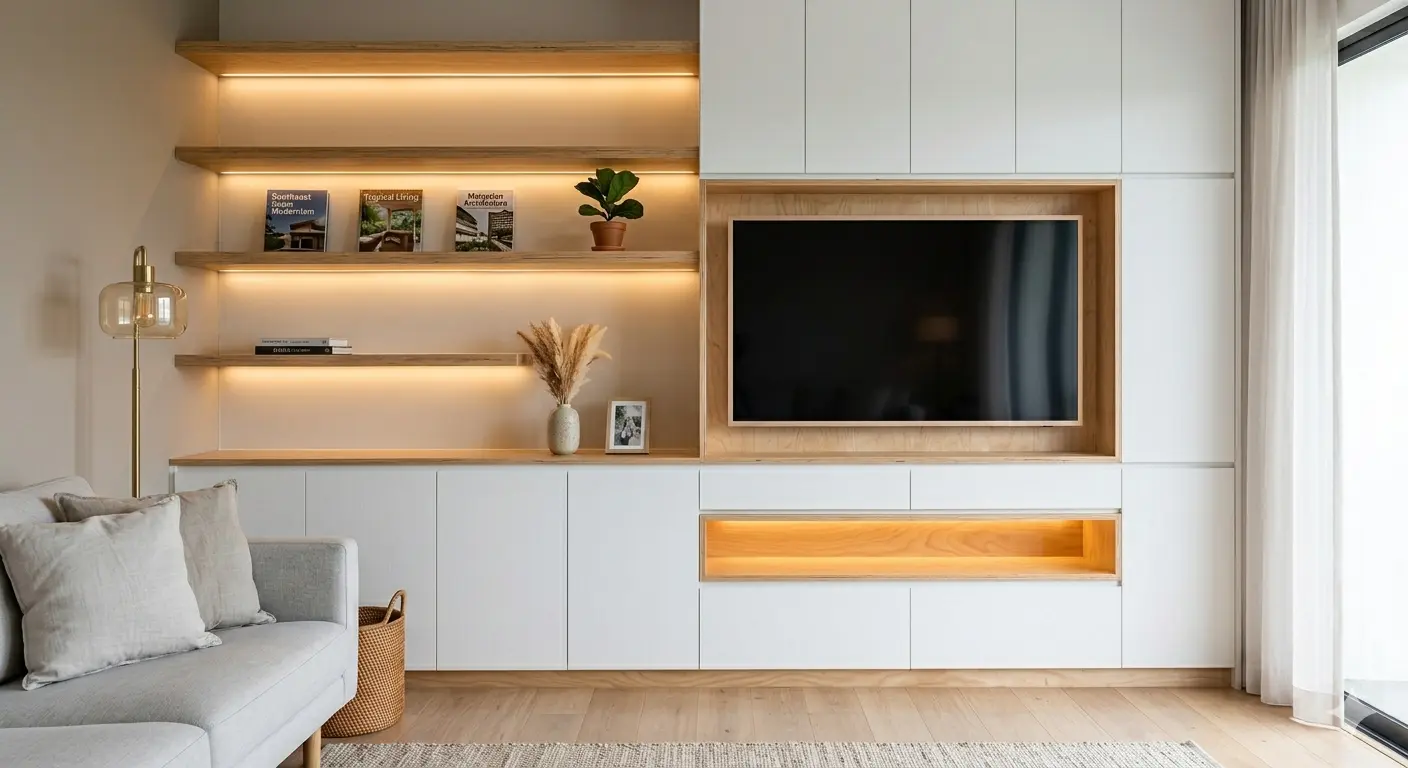
Built-in TV consoles, display shelves, and storage units work beautifully in melamine for a clean, modern look with consistent colour. Feature pieces like open bookcases, study desks, or statement furniture benefit from plywood's natural texture and ability to be customised with different finishes.
Environmental Considerations
Look for boards certified by the Forest Stewardship Council (FSC) or those that meet E1 or E0 formaldehyde emission standards. Low-emission boards are particularly important for bedrooms and children's rooms where air quality directly impacts health. Many Malaysian suppliers now stock eco-friendly options in both categories.
Our Professional Recommendation
After completing hundreds of renovation projects across the Klang Valley, our recommendation is clear: use both materials strategically.
For most Malaysian homes, the ideal approach is:
- •Melamine carcasses for all cabinet interiors, wardrobe interiors, and enclosed shelving — budget-friendly, moisture-resistant, and zero maintenance
- •Plywood doors and drawer fronts finished with laminate, veneer, or paint — durable, great screw retention, and a premium feel
- •Marine-grade plywood in wet kitchens and bathroom vanities where water exposure is constant
- •Standard melamine in dry kitchens, bedrooms, and living areas where moisture is not a concern
This hybrid approach delivers the best balance of cost, durability, and aesthetics for Malaysian homes. You get a renovation that looks premium without overspending on materials hidden behind closed doors.
Need help choosing the right materials for your renovation? Book a free consultation with our design team — we will assess your space, discuss your budget, and recommend the best material combination for your project.
Looking for an interior designer near you?
OutBox Design serves homeowners across the Klang Valley with full design-and-build services.