Pet-Friendly Home Design: Complete Guide for Cat & Dog Owners in Malaysia
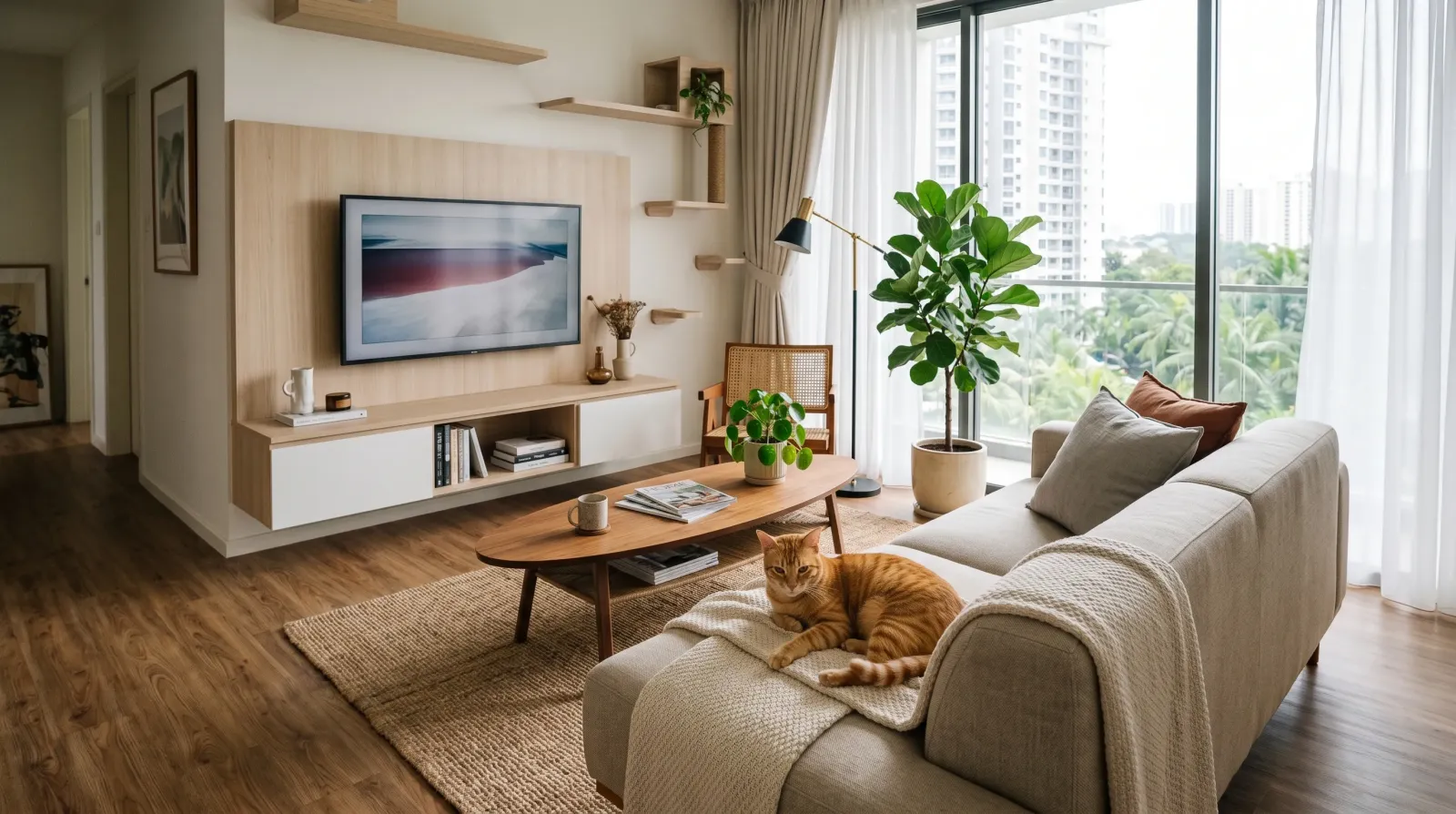
Malaysia is a nation of pet lovers. From cats — the undisputed favourite — to a growing population of dog owners, millions of Malaysian households share their living spaces with animals.
Yet most homes are still designed as if pets don't exist. Owners retrofit cat trees into corners, tape cable covers to walls, and battle fur on furniture that was never chosen with pets in mind. This guide covers the practical design decisions every cat and dog owner in Malaysia should consider before or during renovation.
Key takeaways
Flooring is the most important material choice — luxury vinyl tile (LVT) is the best all-round option for pet owners.
A dedicated cat room is the single biggest upgrade for cat owners. Even a small converted utility room makes a huge difference.
Scratch-resistant materials like melamine panels, satin-finish paint, and microfibre upholstery protect surfaces without sacrificing style.
Design a paw wash zone near your front door — muddy paws should never make it past the first metre of your home.
The cost of building pet-friendly features into a renovation is minimal compared to the ongoing cost of repairing damage.
Choosing Pet-Friendly Flooring
Flooring is the single most important material decision in a pet-friendly home. Your pet spends most of its life on the floor, and the wrong choice leads to scratches, stains, and constant maintenance.
In Malaysia's humid climate, the best options are:
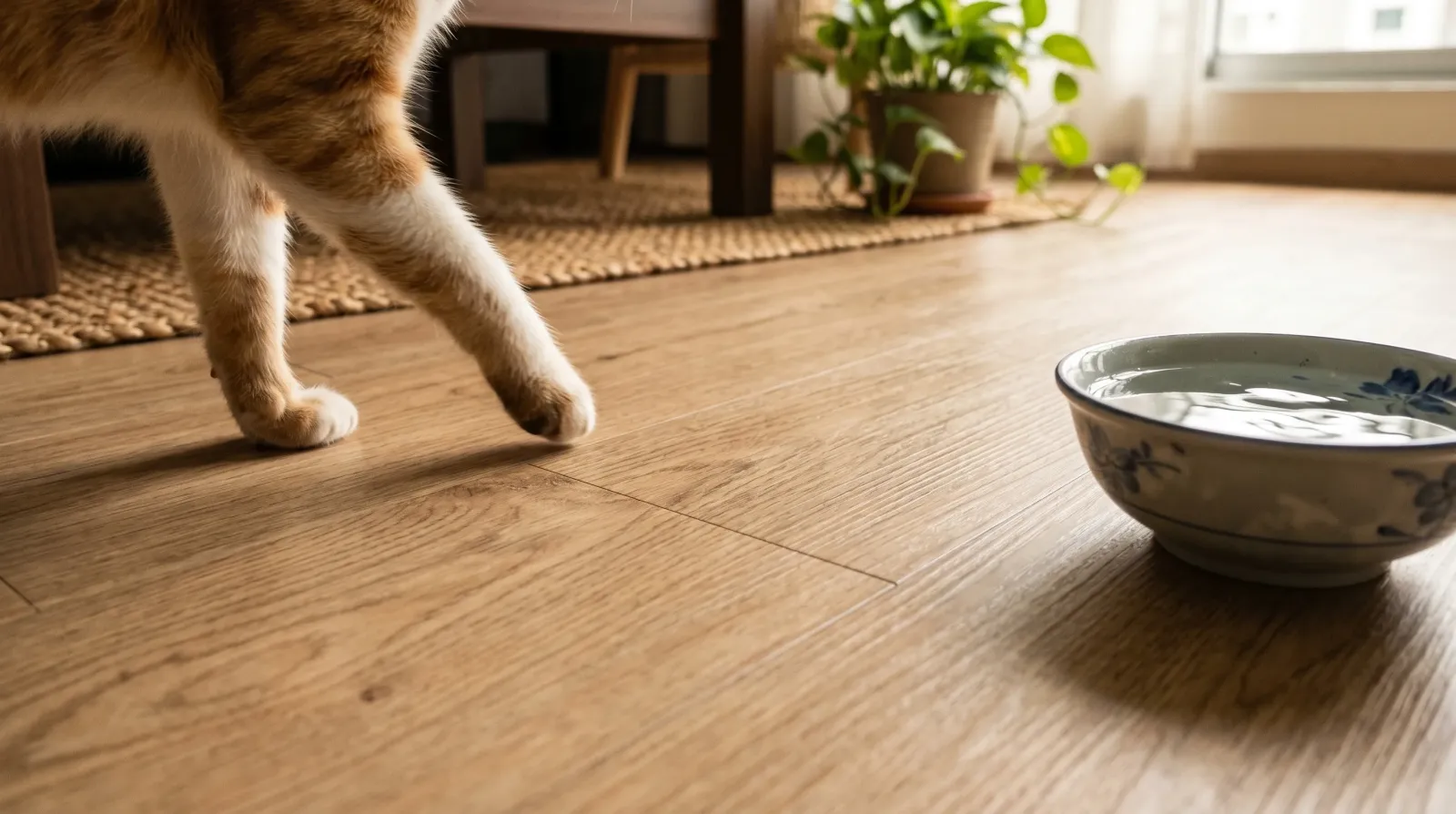
- •Luxury vinyl tile (LVT) — waterproof, scratch-resistant, quiet underfoot, comfortable for joints, and available in realistic wood-grain patterns
- •Porcelain tile — virtually indestructible and easy to mop. Choose textured or matte finishes to prevent slipping when wet
- •Polished concrete — extremely durable, seamless (no joints for moisture to seep into), and cool in tropical heat
What to avoid
- •Solid hardwood — dog claws leave permanent scratches that no amount of refinishing can keep up with
- •Laminate — moisture from water bowls or accidents seeps into joints and causes irreversible swelling
- •Deep-pile carpet — traps hair, absorbs odour, and is nearly impossible to keep clean with pets
Scratch-Resistant Materials for Walls and Furniture
Cats scratch. It's not misbehaviour — it's essential for claw health, stretching, and territory marking. The question isn't how to stop scratching, but how to direct it and protect your surfaces.
Walls
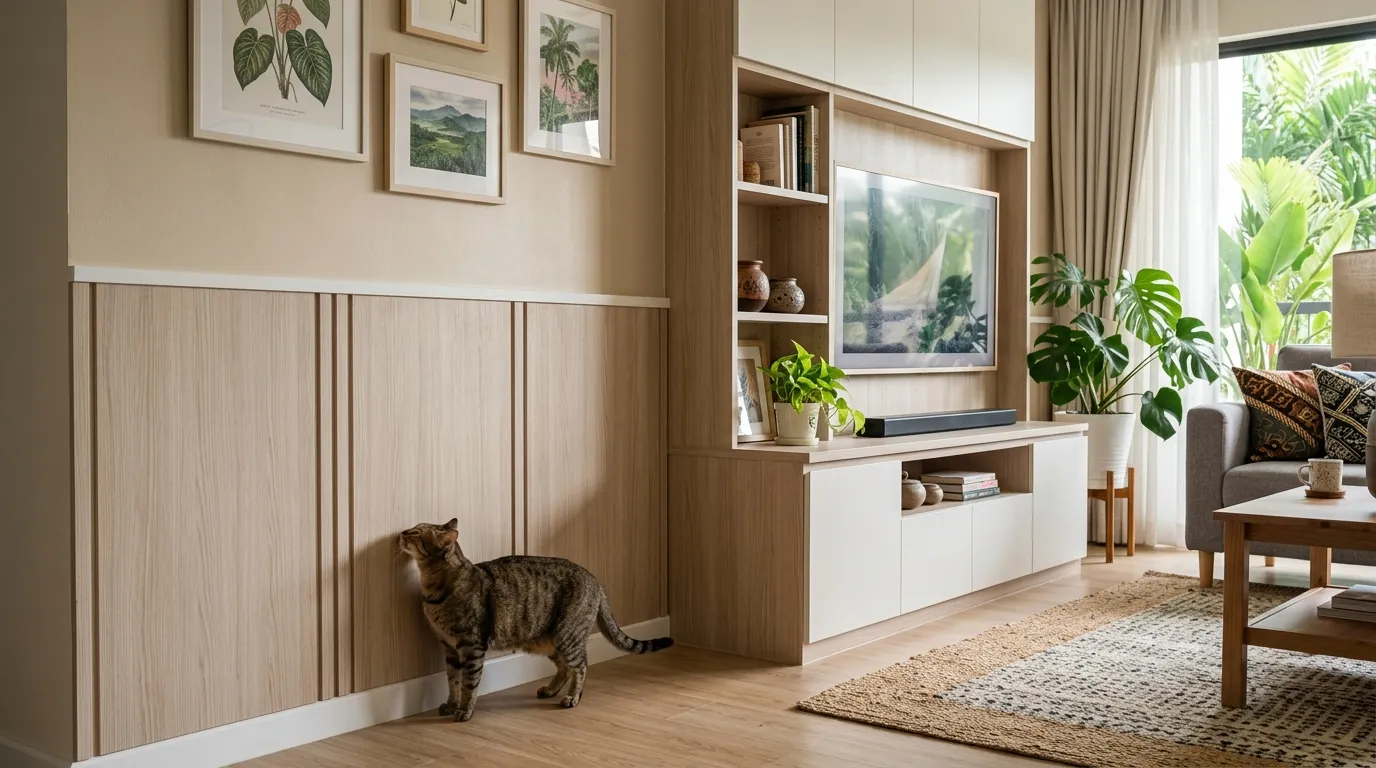
Use washable paint with a satin or semi-gloss finish rather than matte — satin resists scuff marks and can be wiped clean. In areas where cats rub or scratch, consider melamine wainscoting on the lower half of the wall. These panels are virtually scratch-proof and can be replaced individually without repainting.
Furniture
- •Microfibre and performance fabrics resist snagging far better than linen, silk, or loosely woven cotton
- •Genuine leather develops a patina that hides minor scratches, but deep gouges are permanent. High-quality PU leather offers the look without the risk
- •Flat-panel built-in cabinetry is more cat-resistant than freestanding furniture with ornate legs and open backs
Designing a Dedicated Cat Room
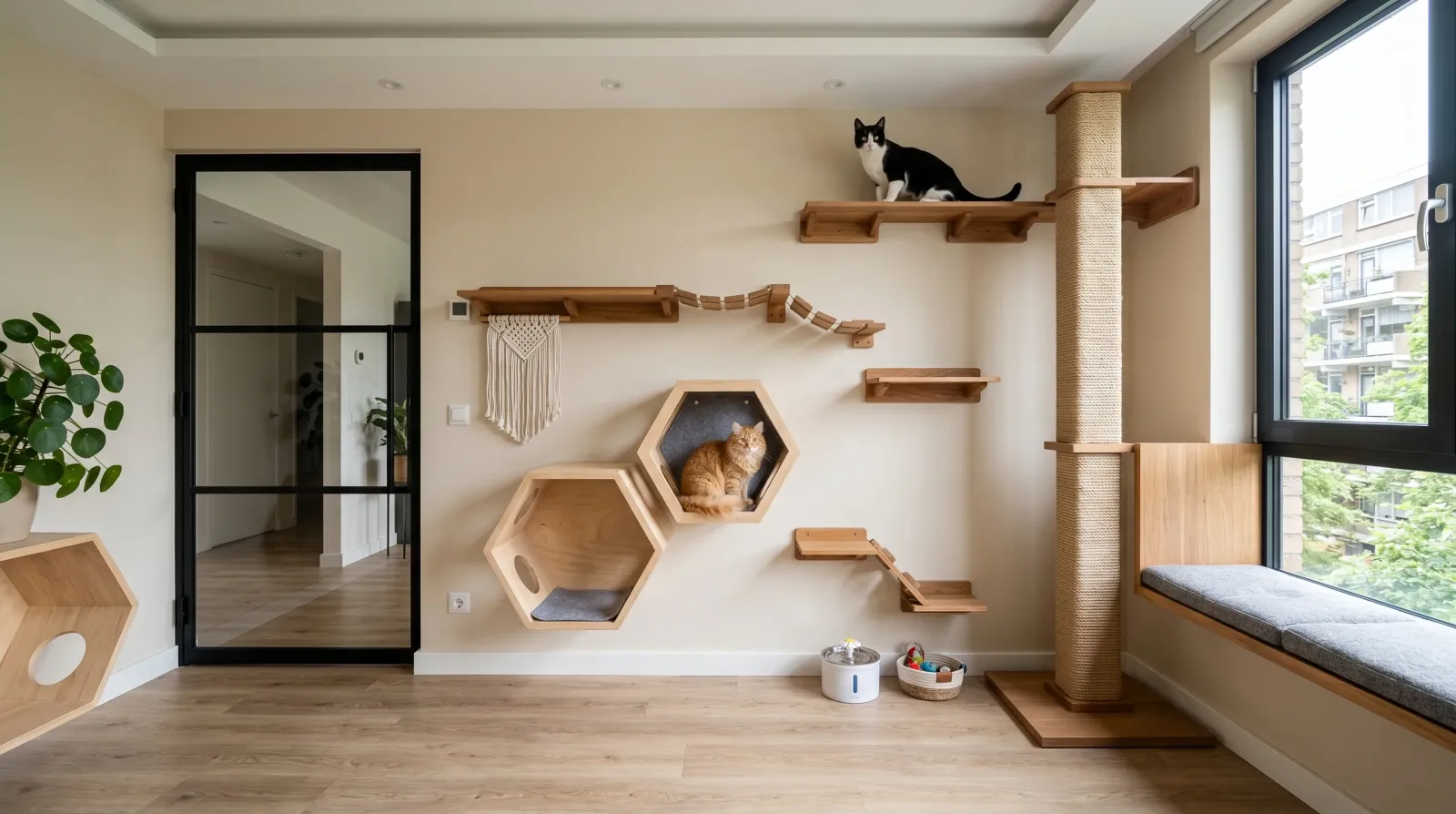
A dedicated cat room is the single biggest upgrade a cat owner can make. Rather than scattering cat furniture around your home, a purpose-built room gives your cats a space for climbing, hiding, scratching, and playing — while keeping the rest of your home fur-free.
A well-designed cat room includes:
- •Wall-mounted climbing shelves at multiple heights
- •Hexagonal or box-shaped hideaway pods for napping
- •Built-in scratching posts wrapped in sisal rope
- •A window perch for bird-watching
- •An enclosed or automated litter station with proper ventilation
The room should have vinyl or tile flooring for easy cleanup, a glass door or window so your cats don't feel isolated, and ceiling-height elements since cats feel safest when surveying from above.
In Malaysian condos where space is limited, even converting a small utility room or balcony creates a dramatic improvement in both your cat's quality of life and your home's cleanliness.
Dog-Friendly Design Considerations
Dogs have different needs from cats. They require open floor space, non-slip surfaces for ageing joints, and — crucially in Malaysia — a washable zone near the entryway for post-walk paw cleaning.
Feeding stations
A built-in feeding station at the correct height for your dog's breed prevents mess and strain. Tuck it into a nook in the kitchen or utility area with a waterproof backsplash and a pull-out mat that catches spills.
Sleeping zones
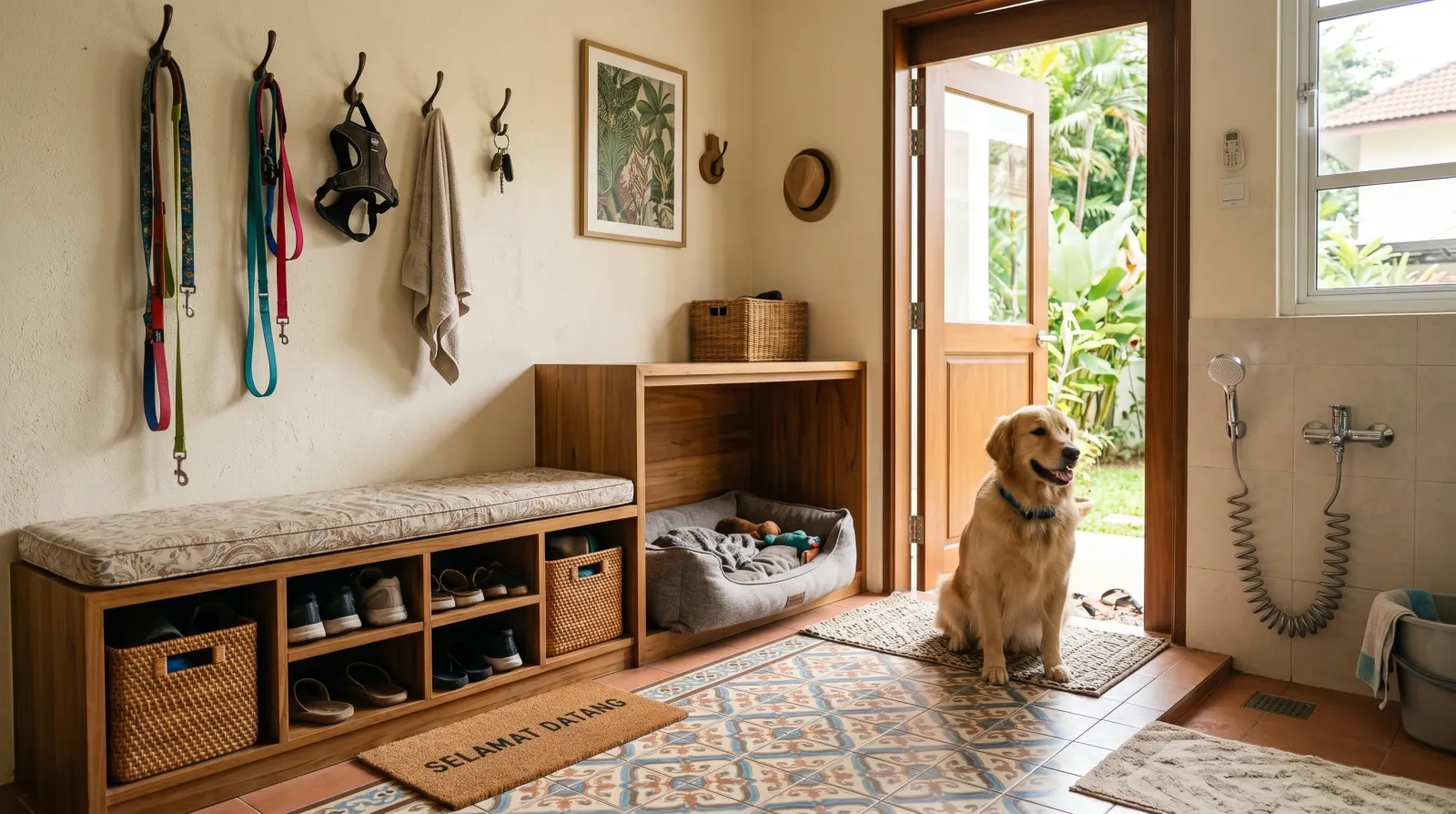
A built-in nook under a staircase, within a custom bench, or beside a window gives your dog a defined space that feels safe. Use removable, machine-washable cushion covers in all pet sleeping areas — covers need regular washing in a tropical climate.
Paw wash zone
Near your front door, design a small wash-down zone with:
- •A hand-held shower attachment or portable paw washer
- •A waterproof tray or tile floor section
- •Hooks for leashes and towels
In landed houses, this can be a dedicated area in the porch. In condos, a waterproof mat station beside the entryway works well.
Managing Pet Hair and Odour Through Design
Hair control
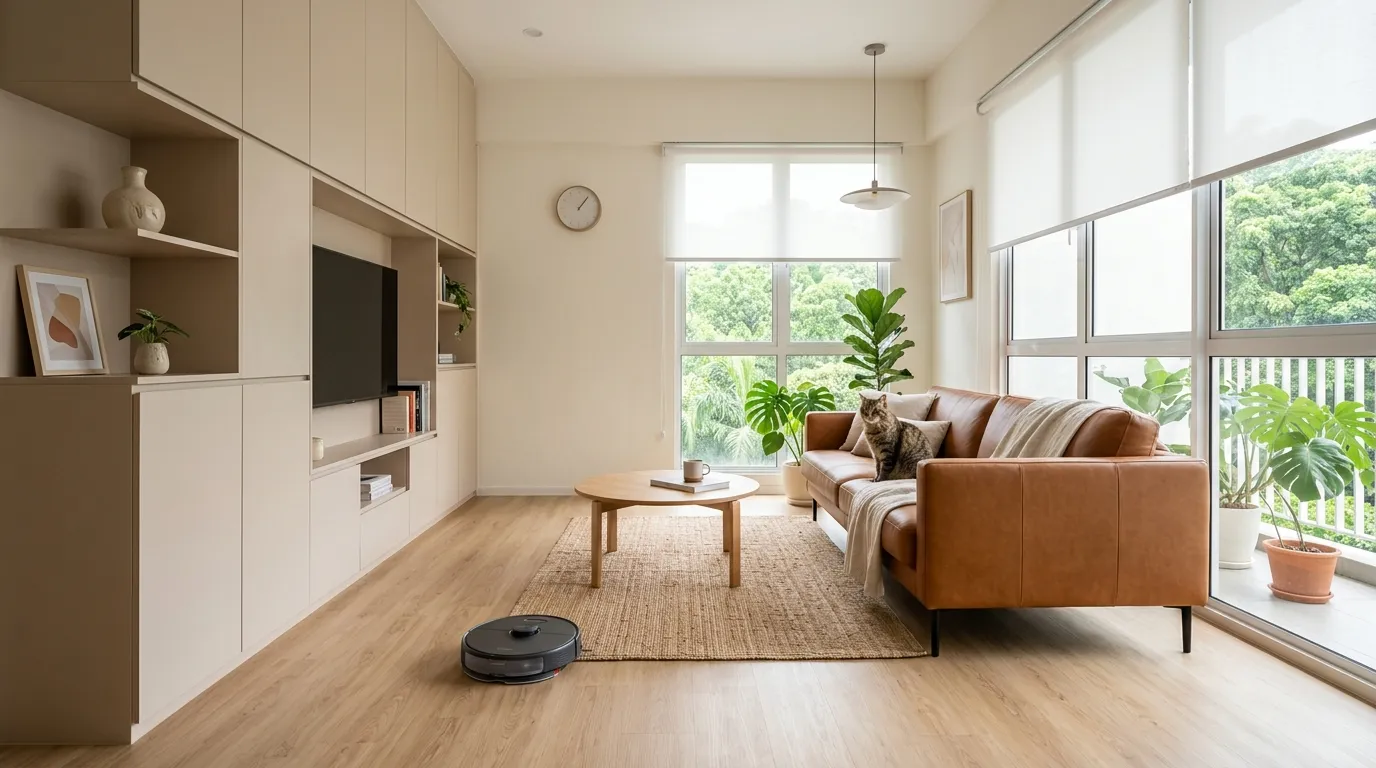
Smooth surfaces are your best weapon. Avoid textured wallpaper, deep-pile carpets, and fabric-upholstered dining chairs — all trap hair and are difficult to vacuum.
Better choices:
- •Flat-panel cabinetry instead of shaker-style doors with grooves
- •Roller blinds instead of curtains
- •Leather or microfibre upholstery instead of woven fabric
Odour control
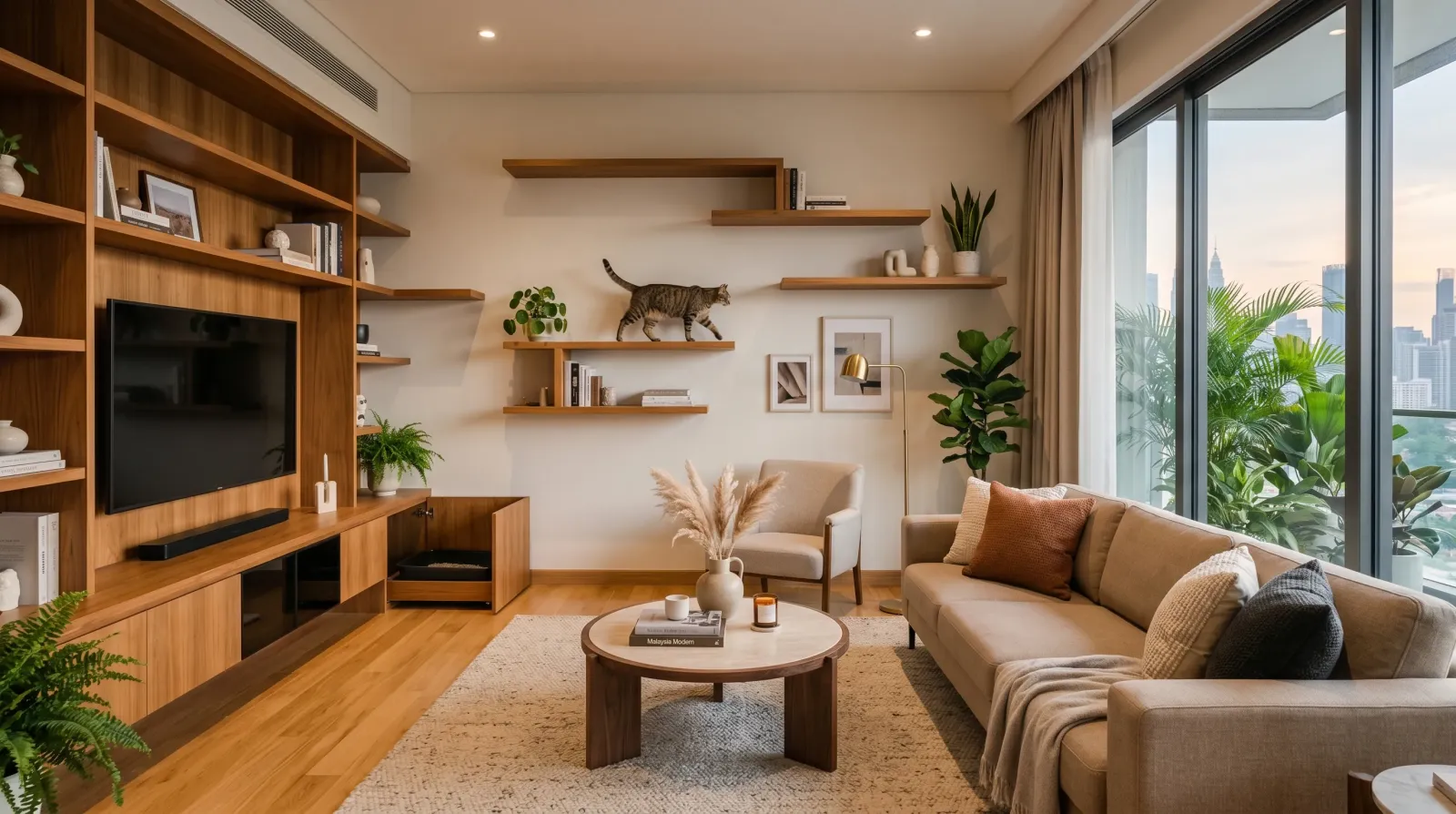
Ventilation is everything. Litter boxes and feeding areas should be near exhaust fans or windows with cross-ventilation. A small carbon-filter exhaust fan inside a litter cabinet eliminates smell at the source.
In Malaysia's heat and humidity, pet areas need air circulation. Stagnant warm air amplifies odour, and bacteria in feeding areas multiply faster in heat. Ensure pet zones are included in your air-conditioned area — pets that overheat become restless and destructive.
Pet-Safe Plants and Toxic Materials to Avoid
Many popular indoor plants are toxic to cats and dogs. Lilies, pothos, dieffenbachia, and sago palm are all commonly sold at Malaysian nurseries and are dangerous if ingested.
Safe alternatives that thrive in Malaysian conditions:
- •Spider plants — non-toxic and nearly indestructible
- •Boston ferns — safe and love humidity
- •Areca palms — cat-safe and excellent air purifiers
- •Calatheas and peperomias — safe, colourful, and compact
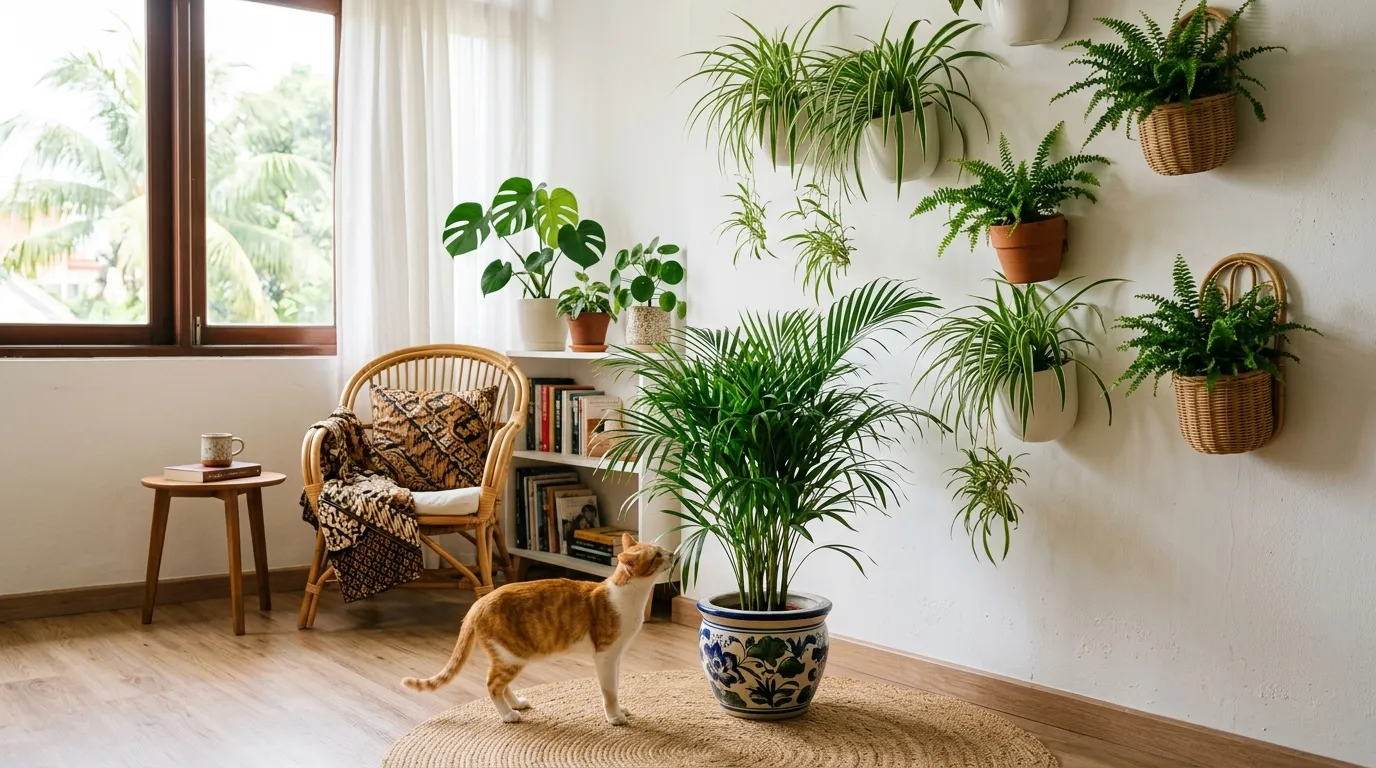
Beyond plants, review all finishes used during renovation. Use low-VOC and zero-VOC paints. Avoid mothballs (naphthalene is toxic), plug-in air fresheners with essential oils (many are toxic to cats), and phenol-based disinfectants.
Keeping Your Home Stylish With Pets
The biggest misconception about pet-friendly design is that it means sacrificing style. The best pet-friendly homes are indistinguishable from any well-designed interior — until a cat appears from a hidden wall passage or a dog settles into a built-in nook.
The key is integration. Pet furniture, litter stations, feeding areas, and scratching surfaces should be designed into the carpentry and architecture, not added as afterthoughts.
Practical tips for maintaining style:
- •Mid-tone warm neutrals hide hair better than pure black or pure white surfaces
- •Custom built-ins that serve dual purposes — a bench with storage and a built-in dog bed, or a TV console with a concealed litter compartment
- •Durable materials from the start rather than cheap alternatives you'll replace in two years
Planning Your Pet-Friendly Renovation
Start by listing every pet-related problem you currently face — scratched furniture, fur on the sofa, litter smell in the hallway, cables your cat chews on, a slippery floor your old dog slides on. Each of these has a design solution.
Brief your interior designer on your pets — their breed, size, age, behaviour, favourite spots, and daily routine. A cat that loves heights needs different solutions from one that prefers hiding spots. A senior dog needs different flooring from an energetic puppy.
The cost of building pet-friendly features into a renovation is minimal compared to the ongoing cost of repairing damage and replacing furniture. Scratch-resistant laminate costs the same as standard laminate. A built-in litter cabinet costs only marginally more than a regular base cabinet. Wall-mounted climbing shelves are a fraction of the price of replacing a shredded sofa every few years.
Design it right once, and you'll spend the next decade enjoying your home with your pets rather than protecting your home from them.
Looking for an interior designer near you?
OutBox Design serves homeowners across the Klang Valley with full design-and-build services.