Muji Interior Design: Why It Works for Malaysian Homes
Walk into a Muji retail store and you'll feel it immediately — a quiet calm that makes you want to stay longer. That same feeling is exactly what Muji interior design brings into your home. Rooted in Japanese minimalism, the Muji style has become one of the most popular design approaches in Malaysia, and for good reason: it suits our compact living spaces, works with our tropical climate, and creates homes that feel genuinely restful after a long day.
Key takeaways
Muji style is built on three principles — simplicity, functionality, and natural materials. Every item earns its place.
The neutral palette and breathable materials make it ideal for Malaysia's tropical climate, keeping homes cool and airy.
A full Muji renovation in Malaysia typically costs RM80,000–RM180,000 depending on property size and carpentry scope.
Muji is not about being empty — it's about being intentional. Storage is hidden, surfaces are clear, and every piece serves a purpose.
What Is Muji Interior Design?
Muji interior design takes its name and philosophy from the Japanese brand Muji (無印良品), which translates to "no-brand quality goods." The core idea is that beauty comes from removing the unnecessary rather than adding decoration. Where other styles layer on textures, colours, and statement pieces, Muji strips back to essentials.
The philosophy rests on three pillars:
- •Simplicity — clean lines, uncluttered surfaces, and a restrained colour palette of whites, beiges, and light wood tones
- •Functionality — every object and piece of furniture must serve a practical purpose. If it doesn't earn its place, it doesn't belong
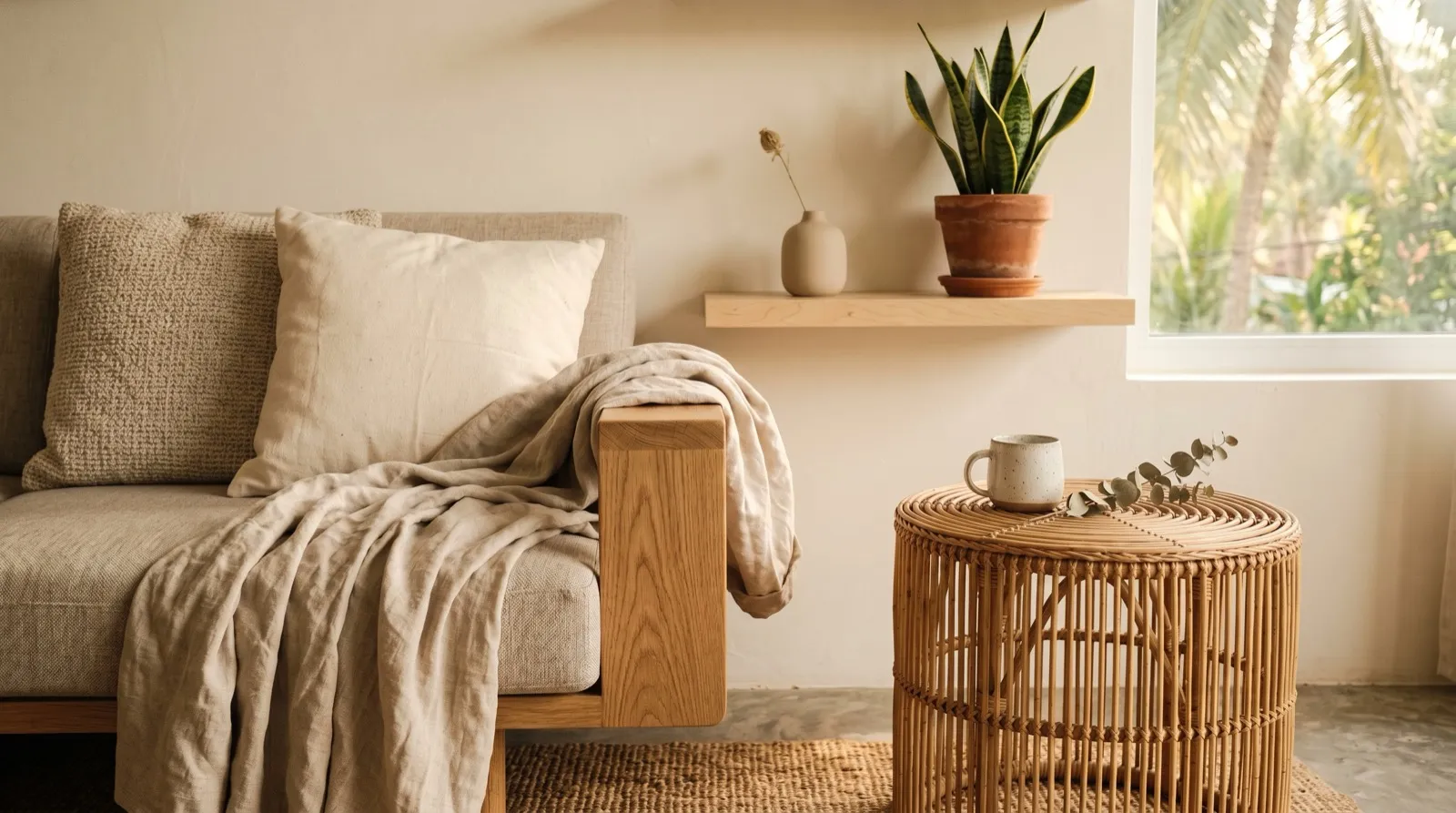
- •Natural materials — untreated wood, cotton, linen, rattan, and stone. Finishes are understated, letting the material's own texture speak
The result is a home that feels calm, organised, and effortlessly warm — not cold or sterile like some minimalist approaches. Muji design has a "lived-in" quality that invites you to exhale the moment you walk through the door.
Why Muji Style Works for Malaysian Homes
Muji isn't just an aesthetic trend in Malaysia — it's a practical fit for how we live. Several characteristics of the style align naturally with local conditions.
Climate compatibility
Malaysia's year-round heat and humidity demand interiors that feel airy and breathable. Muji's signature light colour palette — whites, creams, and pale wood — reflects sunlight and makes spaces feel cooler. Natural materials like cotton and linen are breathable against skin, while rattan and bamboo handle humidity far better than many synthetic alternatives.
Suits compact spaces
Most Malaysian condos and apartment units range from 700 to 1,200 square feet. Muji design excels in compact spaces because it eliminates visual clutter. Built-in storage keeps belongings hidden, multi-functional furniture maximises utility, and the open layout approach makes small rooms feel more spacious than they are.
Low maintenance
Light wood finishes and smooth surfaces are easy to wipe down — a real advantage when dealing with tropical dust and humidity. Muji interiors avoid ornate mouldings, heavy curtains, and decorative crevices that trap moisture and allergens.
Pairs well with Malaysian greenery
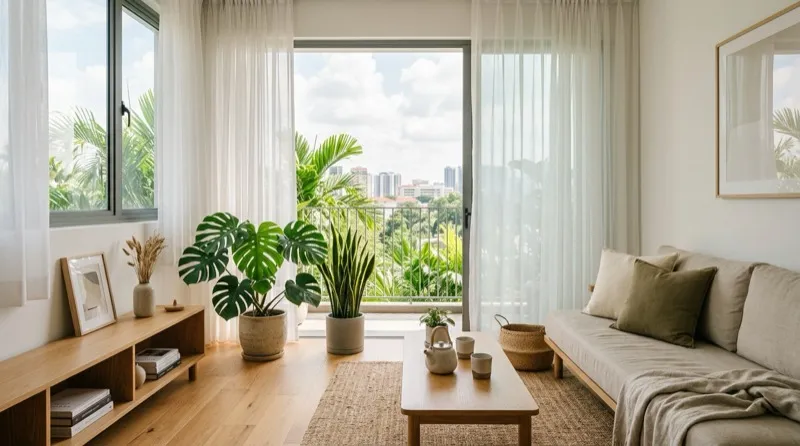
Indoor plants are a natural extension of Muji design, and Malaysia's tropical plants thrive indoors. Low-maintenance options like snake plants, pothos, and monstera blend seamlessly with the Muji palette and add life without competing for visual attention.
Key Elements of a Muji-Style Home
Colour palette
The Muji palette is deliberately restrained: soft whites, warm beiges, light grey, and natural wood tones. This isn't about being bland — it's about creating a visual calm that lets you rest your eyes. Accent colours, if used at all, are muted earth tones: sage green, dusty rose, or soft clay. Bold, saturated colours are avoided entirely.
Materials and textures
Natural materials are non-negotiable in Muji design. Light-toned woods like oak, birch, and ash are the foundation — used for flooring, cabinetry, shelving, and furniture frames. These are paired with:
- •Linen and cotton for curtains, cushion covers, and bedding
- •Rattan and wicker for accent furniture, light shades, and storage baskets
- •Stone and ceramic for countertops and bathroom finishes
- •Bamboo for accessories and organisational items
The key is that finishes remain natural and understated. Avoid high-gloss lacquers, heavy stains, or heavily processed surfaces. The grain of the wood, the weave of the linen, and the texture of the stone should be visible and celebrated. Also read: Melamine Wood vs Plywood: Which is Right for Your Interior Design?
Hidden storage
Clutter is the enemy of Muji design. But minimalism doesn't mean owning nothing — it means storing smartly. Effective Muji homes rely on:
- •Floor-to-ceiling built-in wardrobes that blend into walls
- •Under-bed drawers in platform bed frames
- •Handleless push-to-open cabinetry for seamless surfaces
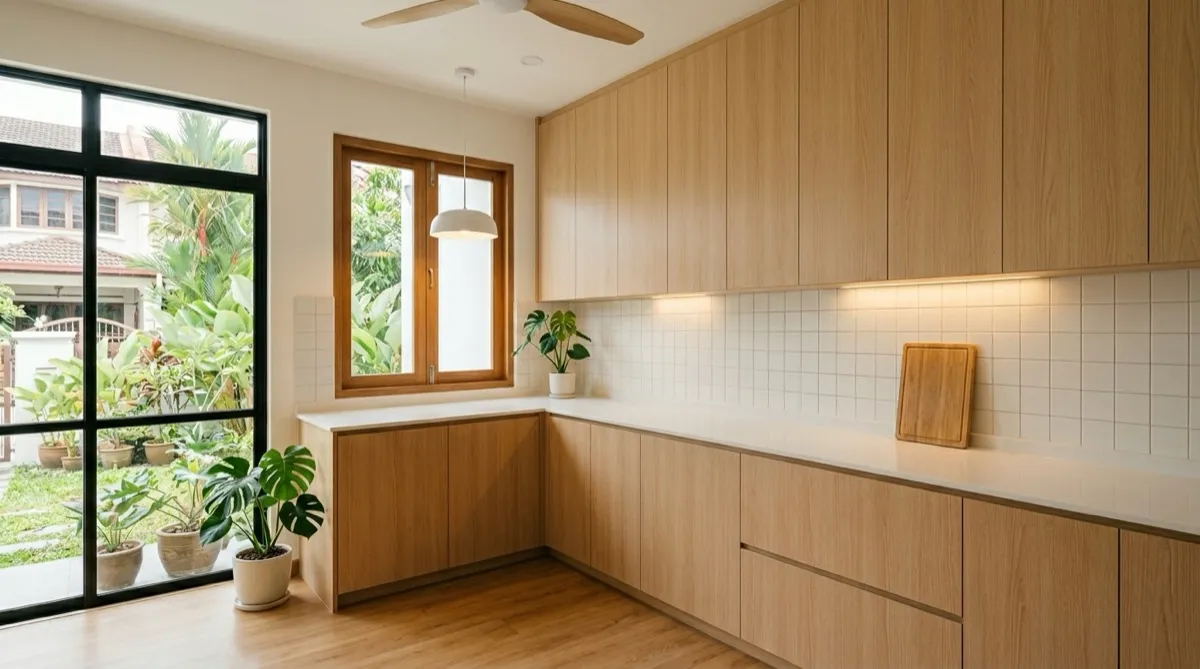
- •Closed upper cabinets rather than open shelving in kitchens
- •Bench seating with hidden compartments in entryways
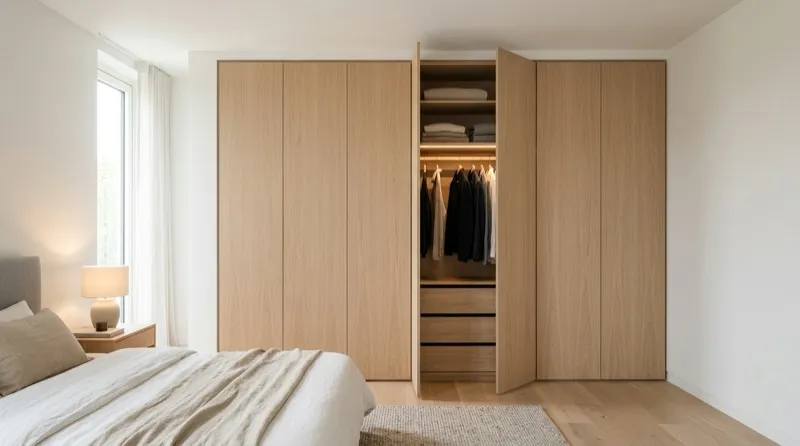
The goal is that daily items are accessible but invisible when not in use. Also read: Maximizing Small Spaces: Smart Storage Solutions
Furniture
Muji furniture is characterised by low profiles, clean lines, and natural wood frames. Sofas sit close to the ground. Beds use low platform frames. Dining tables are simple rectangular forms in light wood. Chairs favour natural curves over angular statements.
Avoid ornate legs, heavy upholstery, dark-stained finishes, and oversized proportions. Every piece should feel lightweight and unobtrusive, even if it's structurally solid.
Room-by-Room Muji Design Ideas
Living room
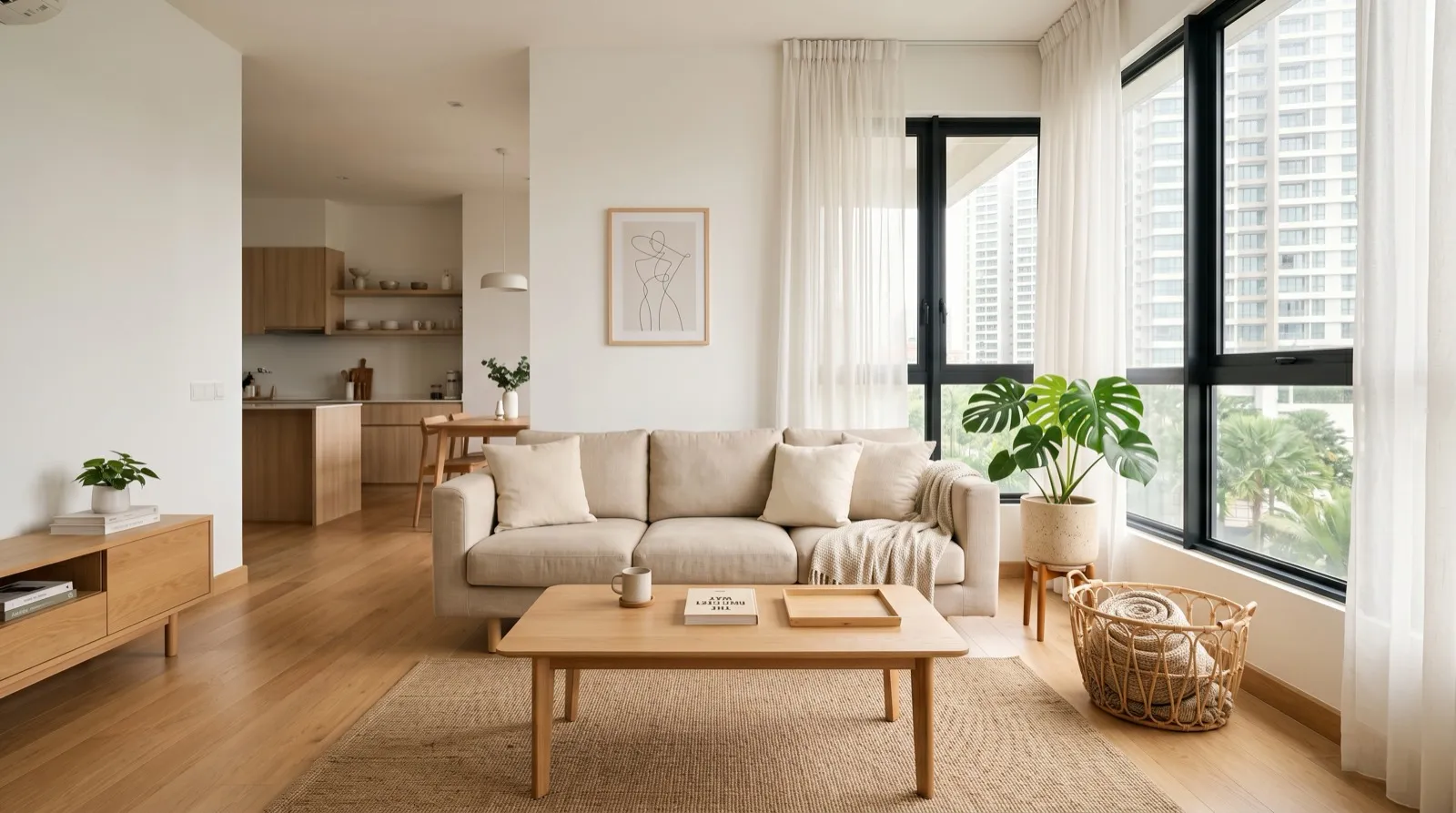
Start with a low-profile sofa in neutral linen or cotton upholstery — grey, oatmeal, or cream. Pair it with a simple light wood coffee table and a woven rattan rug. Keep walls white or light beige. Use one or two floor plants for greenery. Avoid gallery walls, excessive cushions, and heavy curtains — opt for sheer curtains or roller blinds instead.
A Muji living room should feel like a space where your mind can settle. If the room feels busy, remove something.
Kitchen
Light oak or birch cabinetry with handleless or recessed-pull doors keeps the kitchen visually quiet. Use closed upper cabinets rather than open shelving to hide appliances, crockery, and dry goods. Countertops should be clear — store frequently used items in drawers or pull-out organisers.
For Malaysian kitchens, consider a wet-dry separation if space allows. The dry kitchen maintains the Muji aesthetic with clean lines and hidden storage, while the enclosed wet kitchen handles heavy cooking without grease affecting the minimalist finishes. Also read: Wet Kitchen vs Dry Kitchen: Complete Guide for Malaysian Homes
Bedroom
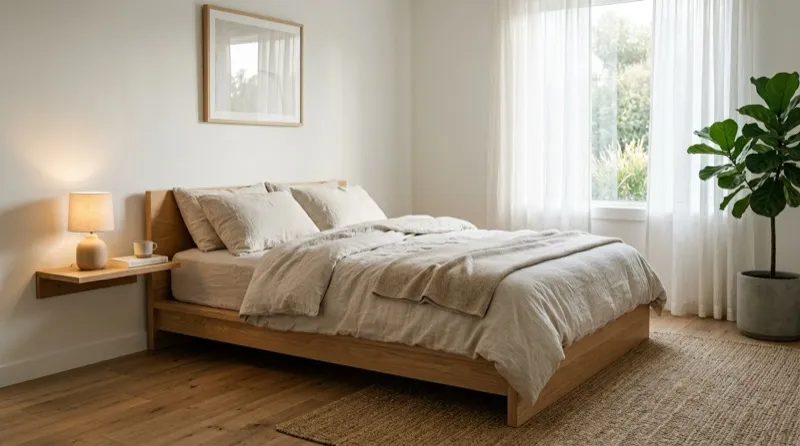
A low platform bed frame in light wood is the centrepiece. Pair it with neutral linen bedding — no bold patterns, no excessive throw pillows. Bedside tables should be simple: either a slim shelf mounted to the wall or a compact wood stool. Built-in wardrobes with smooth, flush doors eliminate the need for freestanding closets.
Keep nightstand surfaces clear: one lamp, one book, nothing more. The bedroom is where the "less is more" principle matters most for quality sleep.
Bathroom
Use light-toned tiles — matte white, pale grey, or warm stone finishes. Floating vanities in light wood create visual space underneath. Store toiletries inside the vanity or a recessed wall niche rather than on the countertop. Towels should be in neutral tones: white, beige, or grey.
Add a small potted fern or a bamboo soap dish for warmth. The bathroom should feel like a quiet retreat, not a cluttered display of products.
Muji vs Japandi vs Scandinavian Minimalism
These three styles share common ground but differ in important ways. Here's how they compare:
| Feature | Muji | Japandi | Scandinavian |
|---|---|---|---|
| Origin | Japanese (brand-inspired) | Japanese + Scandinavian fusion | Northern European |
| Colour palette | Warm neutrals, very light | Warm neutrals with dark contrasts | Cool whites and greys |
| Wood tones | Light and untreated (oak, birch) | Mix of light and dark (walnut accents) | Light pine, ash, beech |
| Contrast | Minimal — everything blends | Moderate — dark accents ground the space | Low — bright and uniform |
| Warmth | Warm through natural materials | Warm through layered textures and wabi-sabi | Can feel cooler, relies on textiles for warmth |
| Decoration | Almost none — function-first | Selective — handcrafted ceramics, imperfect objects | Moderate — candles, textiles, art prints |
| Philosophy | "No brand, quality goods" | Wabi-sabi meets hygge | Hygge (cosiness and contentment) |
| Best for | Compact spaces, tropical homes | Those who want Japanese calm with more character | Those who prefer a brighter, cosier feel |
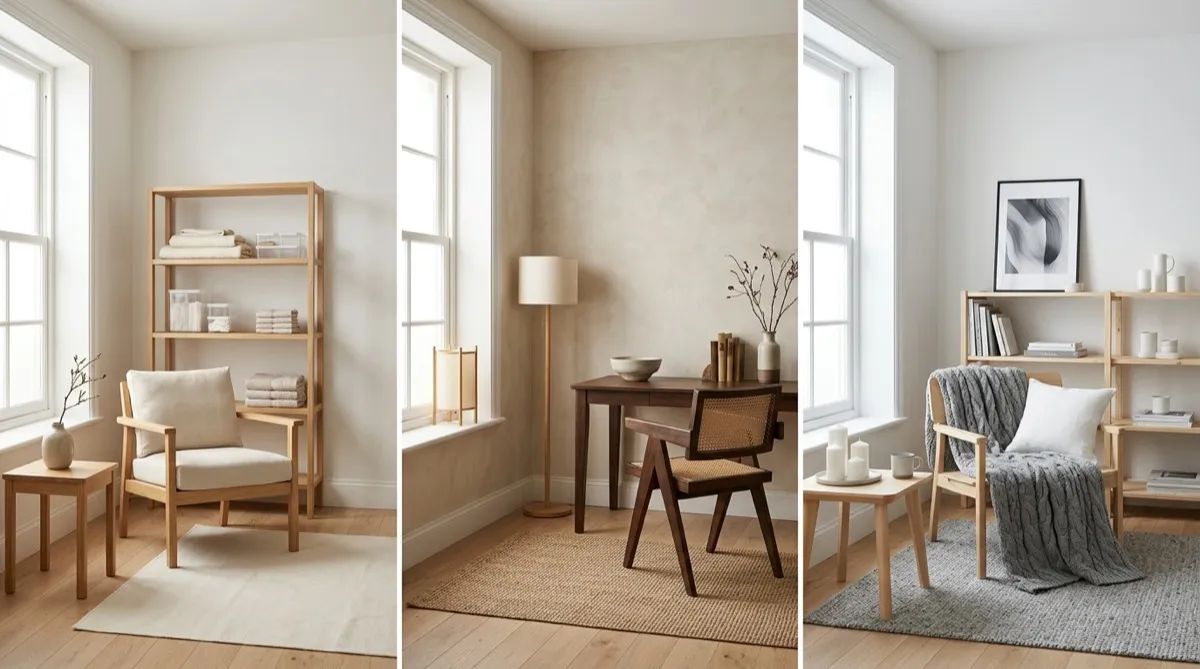
In Malaysia, Muji tends to be the most practical of the three. Its light palette and breathable materials suit our climate better than Scandinavian cool tones, and its restrained approach works well in compact condos where Japandi's dark accent pieces can make rooms feel smaller.
Common Mistakes to Avoid
- •Going too sterile — Muji is warm, not clinical. If your home feels like a hospital waiting room, you've gone too far. Layer in natural textures: a linen throw, a rattan basket, a wooden tray
- •Ignoring humidity — untreated solid wood can warp and crack in Malaysian conditions. Use properly sealed or engineered wood products. Avoid placing wooden furniture directly against exterior walls where moisture builds up
- •Cheap wood that yellows — low-quality laminate and veneer can discolour within a year in tropical heat. Invest in UV-resistant finishes or choose materials rated for humid environments
- •Over-decluttering — minimalism doesn't mean an empty home. A living room with nothing on the coffee table, bare walls, and no textiles feels unwelcoming. Keep a few intentional items: a plant, a ceramic vase, a stack of books
- •Forgetting lighting — Muji spaces rely heavily on warm, layered lighting. A single overhead light kills the ambience. Use a combination of recessed downlights, wall sconces, and table lamps in the 2700K–3000K warm white range
How to Get Started with Your Muji Home
Begin with a realistic assessment of your space and lifestyle. Walk through your current home and ask: what do we actually use, and what's just taking up space? Muji design rewards this kind of honest inventory.
A practical starting plan:
- •Declutter first — before any renovation, reduce your belongings to what you genuinely use and love
- •Choose your wood tone — this single decision anchors every other material choice. Light oak is the most versatile for Malaysian homes
- •Plan storage before aesthetics — map out where every category of item will live. If storage is solved, the clean surfaces follow naturally
- •Start with one room — if a full renovation isn't in the budget, begin with the living room or bedroom to see how the style feels before committing to the whole home
- •Work with a designer who understands the style — Muji looks simple, but the precision required in carpentry, colour matching, and proportion is anything but. A designer experienced in minimalist work can help you avoid the common traps of looking cheap rather than clean
The beauty of Muji design is that it ages well. Unlike trend-driven interiors that feel dated in five years, a well-executed Muji home looks as calm and current a decade later as the day it was completed. It's not about following a trend — it's about creating a home that works quietly in the background of your life.
Looking for an interior designer near you?
OutBox Design serves homeowners across the Klang Valley with full design-and-build services.