How to Choose Your Lighting: A Complete Guide
Lighting is one of the most transformative elements in interior design, yet it's frequently treated as an afterthought. Homeowners spend weeks choosing paint colours and furniture but settle for whatever ceiling light comes standard with their unit. Getting your lighting right can elevate even the simplest interior, while poor lighting can undermine an otherwise beautiful space.
Key takeaways
Every room needs three layers of lighting — ambient, task, and accent — to feel complete.
Colour temperature (measured in Kelvin) determines whether a room feels warm or clinical. Stick to one range per room.
LED technology uses 80% less energy than incandescent bulbs and lasts 15–25 times longer — always the right choice in Malaysia.
Dimmer switches are one of the most cost-effective upgrades, letting you adjust brightness for different activities.
Plan your lighting during the design phase — retrofitting after construction is expensive and disruptive.
The Three Layers of Lighting
Ambient lighting
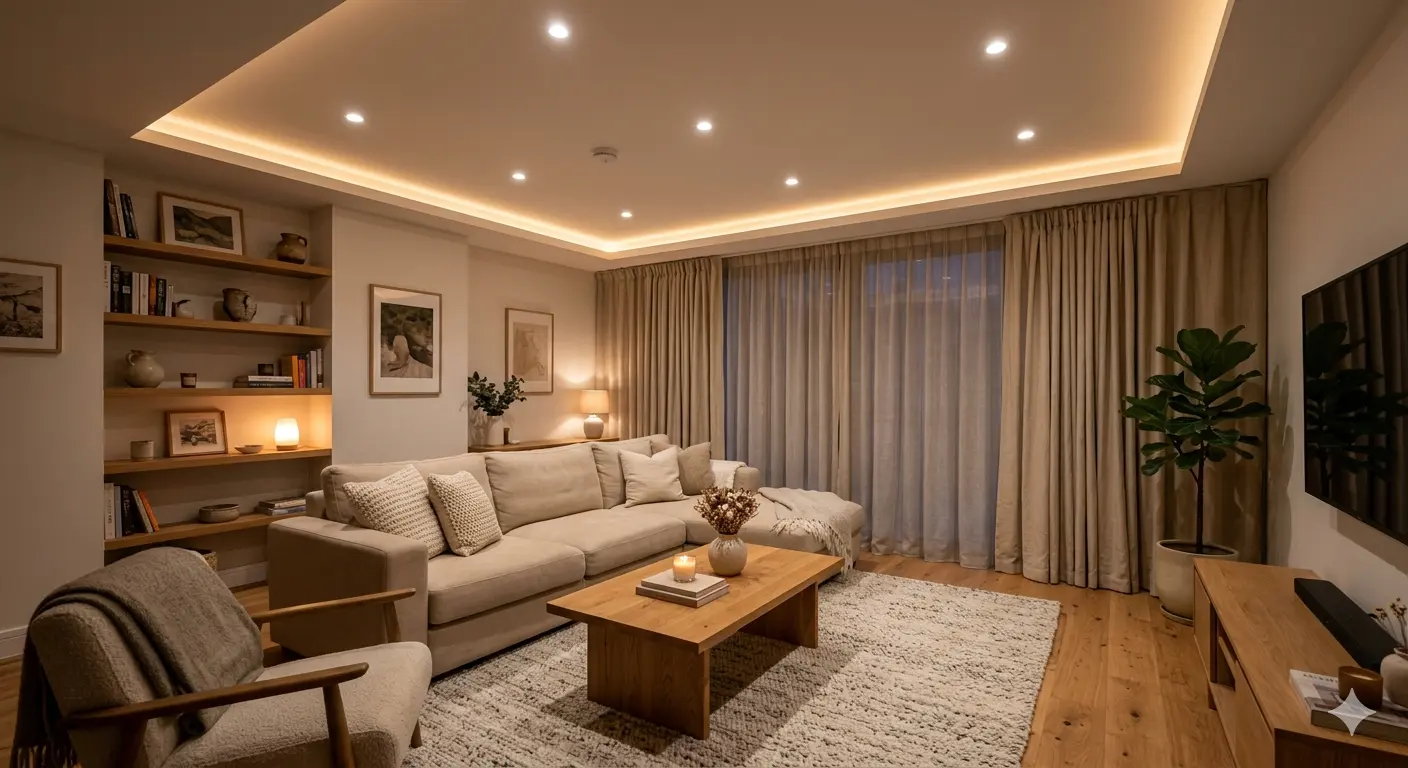
Ambient lighting provides the overall illumination for a room — it's your base layer. Ceiling-mounted fixtures, chandeliers, recessed downlights, and cove lighting all serve as ambient sources. The goal is even, comfortable illumination without harsh shadows or overly bright spots.
Task lighting
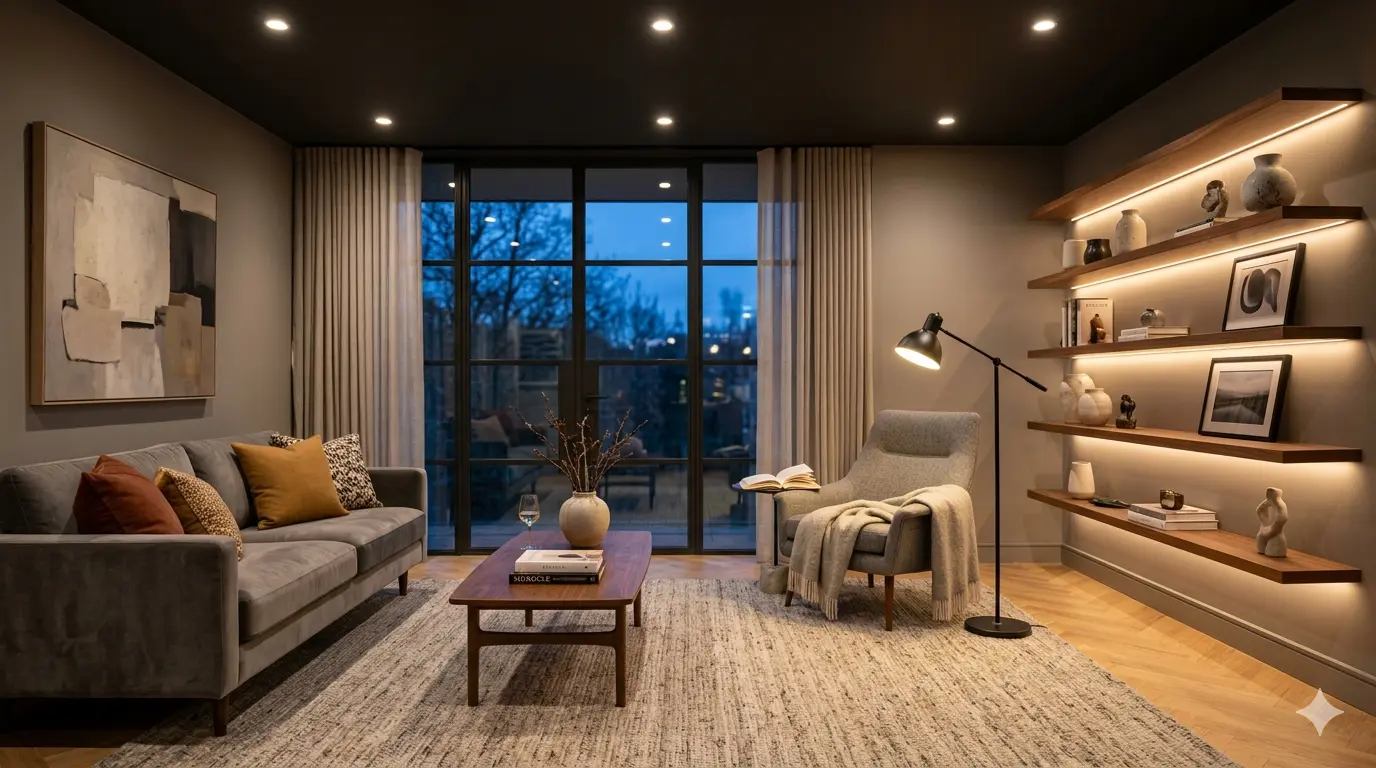
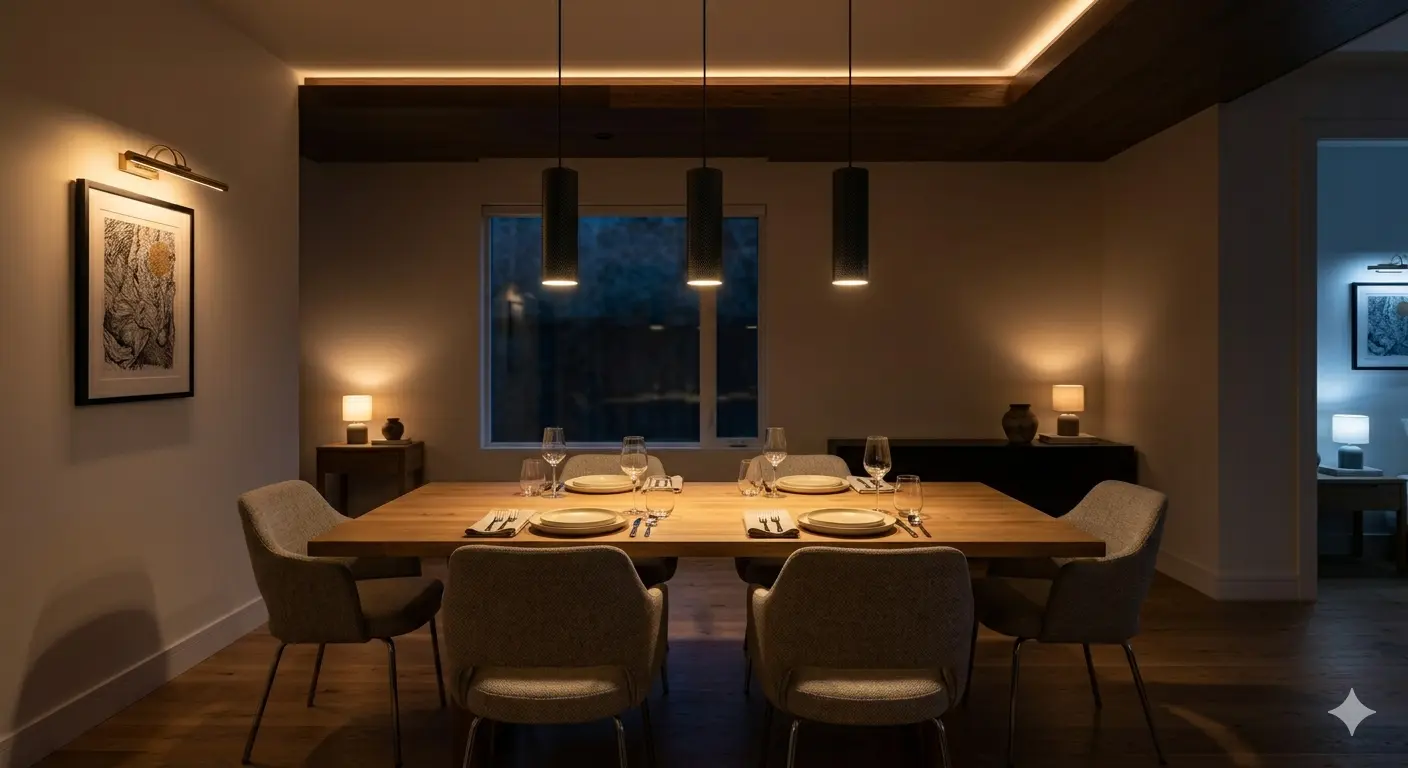
Task lighting provides focused illumination for specific activities. Under-cabinet lights in kitchens, desk lamps in home offices, pendant lights over dining tables, and vanity strips in bathrooms are all effective task lighting. The key is placing these lights where the activity happens, not just where the ceiling has a junction box.
Accent lighting
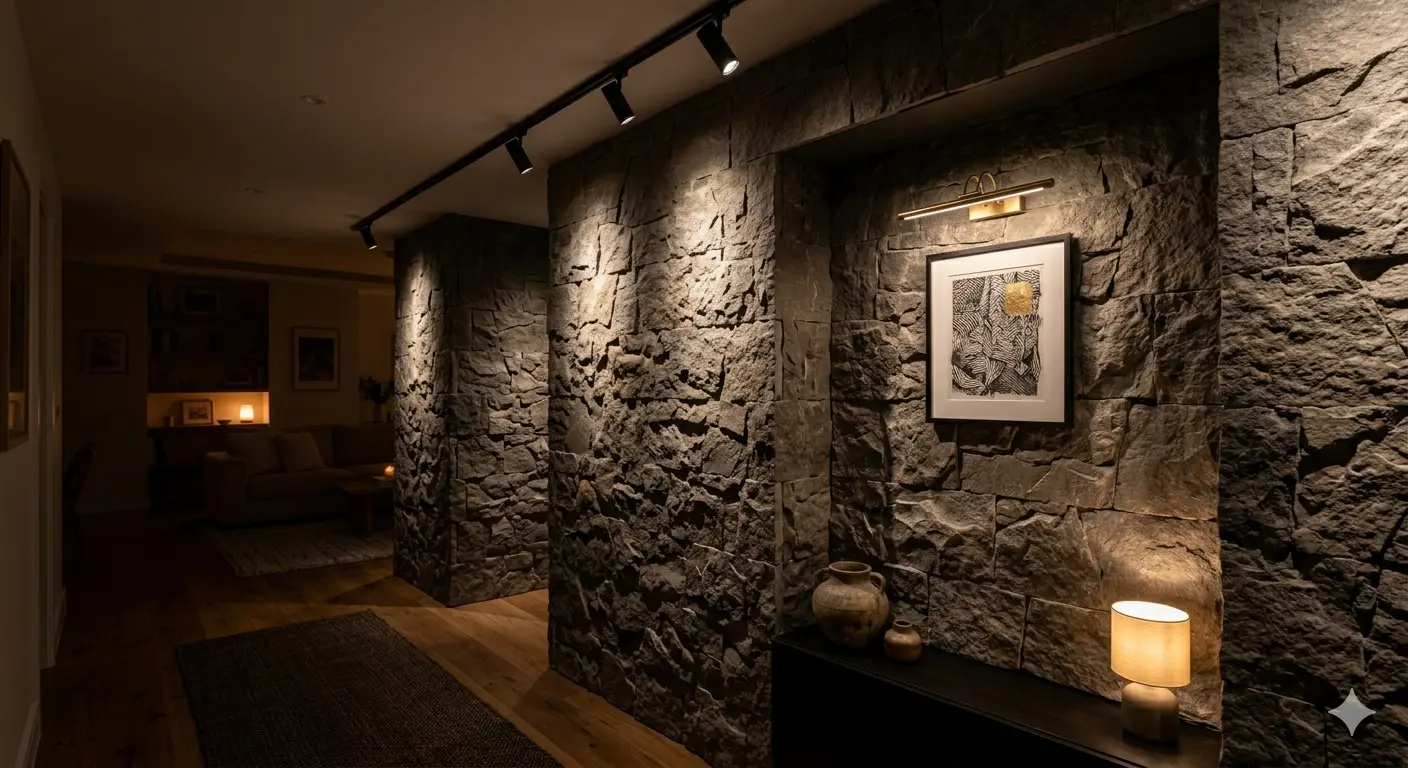
Accent lighting draws attention to architectural features, artwork, display shelves, or textured walls. It creates depth, drama, and visual hierarchy. Track lights, wall washers, LED strip lights, and recessed adjustable spotlights are popular options. Accent lighting should be about three times brighter than the ambient light to create noticeable contrast.
Room-by-Room Lighting Planning
Start by listing every activity that happens in each room:
- •Living room — ambient light for casual evenings, task light for reading corners, accent light for feature walls
- •Kitchen — bright, shadow-free task lighting over prep areas and the hob, ambient for general movement, accent lighting inside glass-front cabinets
- •Bedroom — soft ambient light, bedside reading lamps, and wardrobe interior lighting
- •Bathroom — bright, even vanity lighting for grooming, plus softer ambient light for relaxation
- •Home office — strong task lighting on the desk, ambient light to reduce eye strain from screen contrast
Understanding Colour Temperature
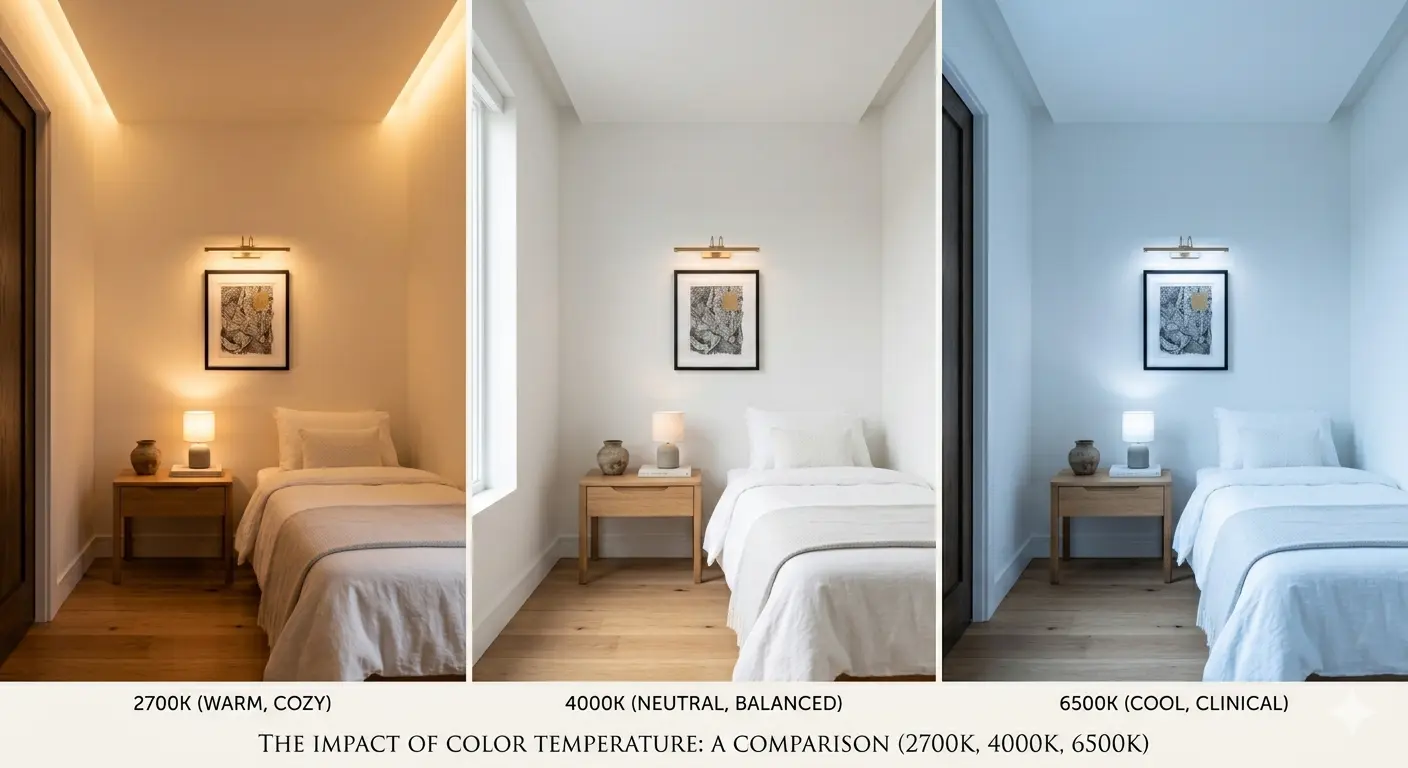
Colour temperature, measured in Kelvin (K), determines whether light appears warm and golden or cool and clinical.
| Temperature Range | Appearance | Best For |
|---|---|---|
| 2700K–3000K | Warm white | Living rooms, bedrooms, dining areas |
| 3500K–4000K | Neutral white | Kitchens, bathrooms, home offices |
| 5000K–6500K | Daylight | Garages, laundry rooms, art studios |
Consistency within a room is essential. Mixing warm and cool bulbs in the same space creates a disjointed, uncomfortable feeling. If your living room has warm ambient lighting but you install a cool-white reading lamp, the contrast will be jarring. Choose one temperature range per room and stick with it.
Natural Light in Malaysian Homes
In Malaysia, we're fortunate to have abundant sunlight year-round, but managing it is key. Large windows and balcony doors can flood rooms with heat and glare if left unchecked.
- •Sheer curtains diffuse harsh afternoon sun while maintaining brightness
- •Blackout curtains in bedrooms ensure restful sleep
- •East-facing rooms get strong morning light; west-facing rooms deal with intense afternoon heat
Dimmer Switches and Smart Controls
Dimmer switches are one of the most cost-effective lighting upgrades. They let you adjust brightness to suit different times of day and activities — bright for morning routines, softer for evening relaxation. Most modern LED bulbs are dimmable, and smart dimmer switches can be controlled via phone or voice assistant. A dimmed LED uses proportionally less electricity, so your power bill benefits too.
LED Technology
LEDs use up to 80% less energy than incandescent bulbs, last 15–25 times longer, and produce minimal heat — a meaningful advantage in Malaysia's warm climate. While LEDs cost more upfront, the savings in electricity and replacement costs make them the clear winner over time.
When shopping for LEDs:
- •Check the lumens (brightness) rather than watts
- •Verify the colour temperature matches your design intent
- •Confirm the bulb is dimmable if you're installing dimmer switches
Common Lighting Mistakes to Avoid
- •Relying on a single ceiling light to illuminate an entire room
- •Spacing lights unevenly — too close together or too far apart
- •Wrong pendant height — dining pendants should hang 75–85cm above the table
- •Forgetting switch placement — plan switch positions before wiring so you're not fumbling in the dark
- •Mixing colour temperatures within a single room
- •Skipping task lighting in work areas like kitchens and home offices
A well-designed lighting scheme layers all three types of light, maintains consistent colour temperature, takes advantage of natural light, and provides controls that let you adapt the space to different moods and activities. Work with your interior designer during the early planning phase — when lighting is planned intentionally from the start, it becomes the invisible force that makes every other design decision look its best.
Looking for an interior designer near you?
OutBox Design serves homeowners across the Klang Valley with full design-and-build services.