Built-In Wardrobe Design Ideas and Cost Malaysia 2026
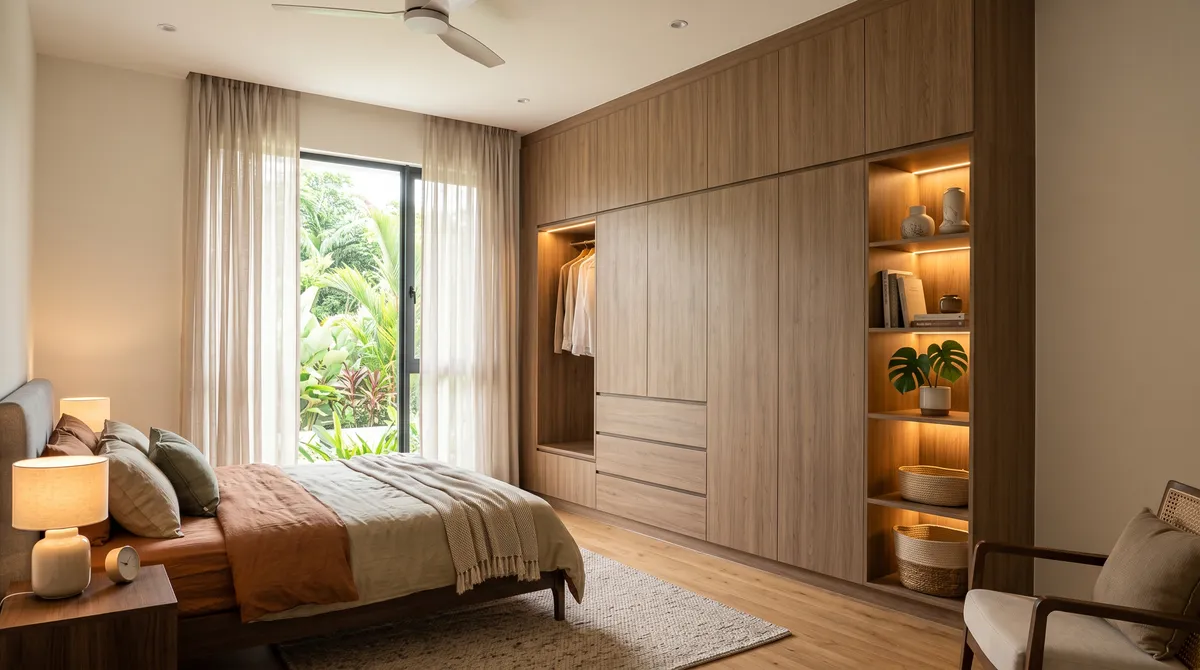
A built-in wardrobe is one of the most impactful upgrades you can make during a renovation in Malaysia. Unlike freestanding wardrobes that leave awkward gaps against walls and collect dust on top, a custom built-in wardrobe fits your bedroom perfectly — floor to ceiling, wall to wall. For homeowners across the Klang Valley renovating condos, terrace houses, and apartments, built-in wardrobes deliver more storage per square foot, cleaner aesthetics, and better long-term durability than any off-the-shelf alternative.
Key takeaways
Built-in wardrobes cost RM 180–600 per foot run in Malaysia depending on material, with a standard 3-door wardrobe running RM 1,800–6,000.
Melamine is the most affordable option for bedroom wardrobes, while moisture-resistant plywood lasts longer in humid conditions.
Floor-to-ceiling designs with soft-close hardware and LED lighting have become the standard for modern Malaysian homes in 2026.
Why Built-In Wardrobes Work Better in Malaysian Homes
Freestanding wardrobes from furniture shops serve a purpose, but they come with real limitations in Malaysia's climate and typical home sizes. A properly constructed built-in wardrobe solves problems that freestanding units simply cannot address.
- •Humidity resistance — Malaysia's year-round humidity of 70–90% causes freestanding particle board wardrobes to swell, warp, and develop mould along the base. Built-in wardrobes use sealed edges, moisture-resistant backing, and proper material selection to handle tropical conditions
- •Space maximisation — a floor-to-ceiling built-in wardrobe captures every centimetre of vertical space. In a typical condo bedroom with 9-foot ceilings, you gain 2–3 feet of storage above what a standard 6-foot freestanding wardrobe offers — perfect for luggage, seasonal items, and extra bedding. See our guide on maximising small spaces for more storage strategies
- •Termite protection — built-in wardrobes constructed with plywood or HMR board and properly sealed edges are far more resistant to termite damage than flat-pack furniture made from raw particle board
- •Cleaner look and resale value — a well-built wardrobe with integrated handles and flush doors gives the bedroom a finished, premium appearance that buyers notice during property viewings

Built-In Wardrobe Design Ideas by Room
Master bedroom
The master bedroom wardrobe is usually the largest in the home and should be designed around how you and your partner actually use it. Most master bedrooms in Klang Valley condos and terrace houses can accommodate a 6–10 foot wide wardrobe along one wall.
- •Full-wall wardrobe (8–10 ft) — the most popular configuration for master bedrooms. Dedicate 60% to hanging space (split between long and short hanging) and 40% to shelves and drawers. Include at least one full-length mirror panel on a door
- •L-shaped or walk-in wardrobe — if your master bedroom is 150 sqft or larger, consider converting a corner into an L-shaped wardrobe or a compact walk-in closet. A functional walk-in needs at least 5 ft x 6.5 ft of floor space, with 24-inch deep shelving on each side and clear walkway in between
- •His-and-hers split — divide the wardrobe into two mirrored sections with separate hanging, drawer, and shelf zones. This avoids the daily negotiation over space that leads to clothing piling up on chairs
Kids' bedroom
Children's wardrobes should be designed to evolve as the child grows. A wardrobe that works for a 5-year-old will not suit a teenager.
- •Adjustable shelving — use shelf pins instead of fixed shelves so heights can be reconfigured as the child's clothing and storage needs change over the years
- •Lower hanging rods — install a second rod at 3-foot height so younger children can reach their own clothes independently. Remove it later when they need full-length hanging space
- •Open cubbies at the bottom — small open compartments below the hanging section make it easy for kids to grab school bags, shoes, or sports equipment without opening doors
Guest or second bedroom
Guest bedrooms and smaller second bedrooms rarely need a full-wall wardrobe. Keep the footprint compact and prioritise versatility.
- •Compact 4–5 foot wardrobe — a two-door wardrobe with one hanging section and one shelved section covers most guest room needs without dominating the room
- •Sliding doors — in bedrooms under 120 sqft, sliding doors save the 60cm of clearance that swing doors require, keeping the walkway clear and the room feeling larger

Door Types: Swing, Sliding and Bifold Compared
The door type affects how much space your wardrobe needs, how it looks, and how much it adds to the cost. Here is how the three main options compare:
| Type | Min Clearance | Best For | Cost Impact |
|---|---|---|---|
| Swing (hinged) | 60cm in front | Large bedrooms with space to open doors fully | Base cost — most affordable option |
| Sliding | None — doors slide behind each other | Compact bedrooms, tight walkways, modern aesthetics | +10–20% over swing doors |
| Bifold | 30cm in front | Medium bedrooms — full access without full swing space | +15–25% over swing doors |
Sliding doors give the cleanest look and work best in compact Malaysian condos, but you can only access half the wardrobe at a time. Swing doors give full access to every section simultaneously — practical if you are getting dressed in a hurry. Bifold doors split the difference but cost the most.
Materials and Finishes for Malaysian Wardrobes
The material you choose determines how long your wardrobe lasts, how it handles humidity, and how much it costs. All three options below are commonly used by contractors and interior designers across the Klang Valley.
- •Melamine board (18mm E1 grade) — the most affordable option at roughly RM 180–300 per foot run. Melamine is a particle board core with a pre-laminated decorative surface. It works well for bedroom wardrobes in air-conditioned rooms but can swell if exposed to sustained moisture. Available in hundreds of colours and woodgrain finishes
- •Moisture-resistant plywood (MR grade) — costs RM 350–500 per foot run. Plywood is stronger, more durable, and handles humidity far better than melamine. If your bedroom is not air-conditioned or your home is in a humid, low-lying area, plywood is the safer long-term choice
- •HMR board (High Moisture Resistant) — a middle ground at RM 250–400 per foot run. HMR is essentially upgraded particle board with water-resistant resin bonding. It handles moderate humidity better than standard melamine but is not as structurally strong as plywood
For finishes, the most popular options in 2026 are matte laminate in woodgrain or solid tones, high-gloss acrylic for a contemporary look, and frosted glass or mirror panels on selected doors. For a detailed comparison of melamine and plywood properties, durability, and pricing, read our melamine vs plywood guide.

Built-In Wardrobe Cost in Malaysia 2026
Here is what you can expect to pay for a built-in wardrobe in Malaysia, with supply, fabrication, and installation included:
| Wardrobe Size | Melamine (E1) | Plywood (MR) | Premium (plywood + glass/mirror) |
|---|---|---|---|
| 3-door, 6 ft wide | RM 1,800–2,500 | RM 3,000–4,000 | RM 4,500–6,000 |
| 4-door, 8 ft wide | RM 2,500–3,500 | RM 4,000–5,500 | RM 6,000–8,500 |
| 5-door, 10 ft wide | RM 3,200–4,500 | RM 5,000–7,000 | RM 8,000–11,000 |
| Walk-in (L-shaped, ~50 sqft) | RM 5,000–8,000 | RM 8,000–12,000 | RM 12,000–18,000+ |
Prices typically include the carcass, doors, shelves, hanging rods, basic handles, and installation. Add-ons like soft-close hardware, LED lighting, pull-out accessories, and premium handles are usually quoted separately and can add RM 500–2,000 depending on how many features you include.
Worth knowing: Get at least three quotes from different contractors or interior designers. Pricing for the same specifications can vary by 30–40% across the Klang Valley. Ask each quote to itemise material, hardware, and installation costs so you can compare fairly.
Smart Features Worth Adding to Your Wardrobe
These upgrades cost relatively little but make a big difference in daily use. Prioritise based on how you actually use your wardrobe.
- •Soft-close hinges and drawer slides — prevents slamming, reduces wear on the carcass, and makes the wardrobe feel premium. Standard on most mid-range and above builds in 2026
- •LED strip lighting — motion-activated LED strips along the top interior edge or inside drawers use minimal electricity and make finding clothes in a dimly lit bedroom much easier. Budget roughly RM 150–300 per wardrobe section
- •Pull-out trouser rack — holds 15–20 pairs of trousers on individual sliding bars without creasing. Fits in a 60cm wide section and keeps trousers visible at a glance
- •Jewellery and accessories tray — a shallow velvet-lined pull-out drawer keeps watches, rings, and accessories organised. Usually installed at waist height for easy access
- •Full-length mirror panel — mounted on the inside or outside of one wardrobe door, this saves wall space and adds daily functionality without extra furniture
- •Pull-out shoe shelf — angled wire or acrylic shelves at the bottom of the wardrobe keep shoes visible and ventilated. Fits 8–12 pairs in a 2-foot wide section

How to Brief Your Designer for the Perfect Wardrobe
The difference between a wardrobe that works perfectly and one that frustrates you daily comes down to the brief you give your designer. Before your first meeting, prepare these details:
- •Measure your longest hanging garment — most people underestimate how much long-hanging space they need. Measure your longest dress, coat, or baju kurung and add 5cm clearance. This determines the minimum hanging section height
- •Count your folded-to-hanging ratio — if 70% of your wardrobe is folded T-shirts and jeans, you need more shelves and drawers than hanging rods. Most designers default to a 50/50 split, which wastes space for casual dressers
- •Specify wardrobe depth — standard depth is 24 inches (60cm), which fits hangers comfortably with the doors closed. Going shallower than 22 inches means hangers will angle and clothes will snag on doors
- •Plan for accessories upfront — decide whether you want pull-out trouser racks, tie holders, shoe shelves, or jewellery trays before fabrication starts. Adding them after the wardrobe is built is expensive and sometimes impossible
- •Set a hardware budget — soft-close systems, premium handles, and LED lighting can add RM 500–2,000 to your total. Decide on these before your designer finalises the quote, not after
The most common wardrobe mistake we see during condo renovations is designing too many short-hanging sections and not enough shelf space. Malaysian homeowners tend to fold more than they hang — especially in the tropics where heavy coats and blazers are rarely needed. Push for at least 40% shelf and drawer space unless your wardrobe is dominated by formal wear or traditional garments.
A well-designed built-in wardrobe should last 15–20 years and make getting dressed easier every single day. Take the time to brief your designer properly, choose the right material for your climate, and invest in hardware that matches how you actually use the space. Ready to design yours? Get in touch with us for a free consultation and 3D visualisation of your ideal wardrobe layout.
Looking for an interior designer near you?
OutBox Design serves homeowners across the Klang Valley with full design-and-build services.