Quartz vs Granite Countertop Malaysia: Cost, Durability and Which to Choose
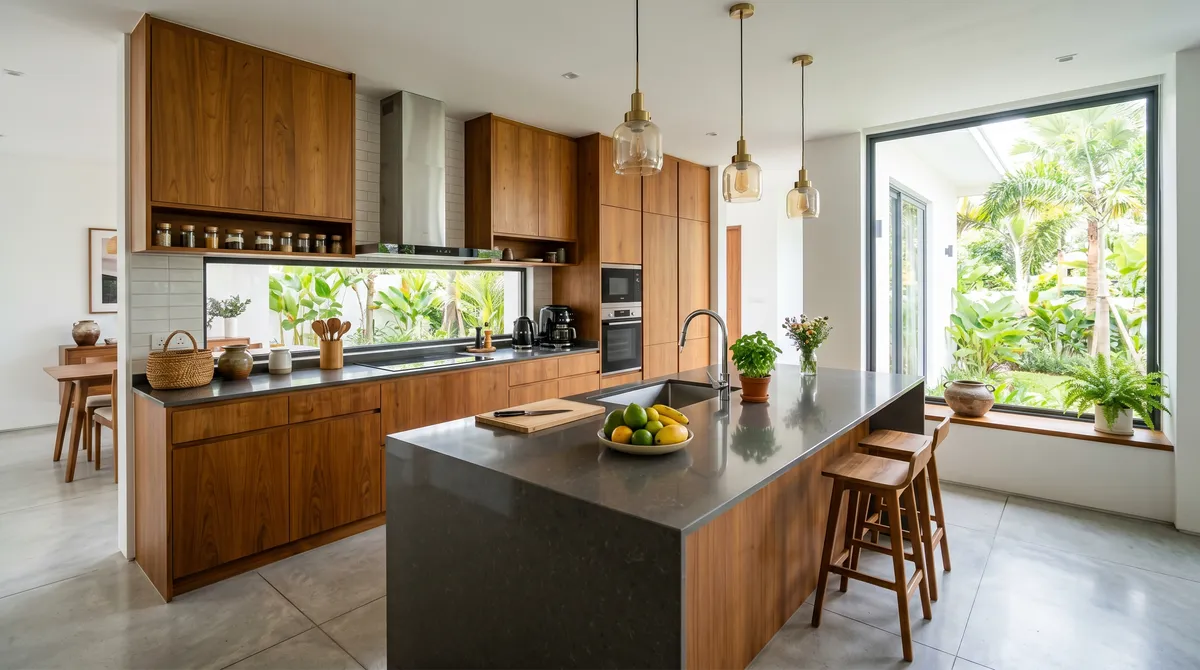
If you are renovating your kitchen in Malaysia, the countertop decision usually comes down to two materials: quartz and granite. Both are durable, look premium, and suit Malaysian kitchens — but they perform very differently under the conditions that matter most here. One handles wok heat without flinching while the other shrugs off turmeric stains. Choosing the wrong material for the wrong kitchen zone is a mistake we see regularly in Klang Valley renovations, and it is completely avoidable once you understand how each surface actually performs.
Key takeaways
Quartz is engineered, non-porous, and virtually maintenance-free — ideal for dry kitchens, islands, and bathrooms.
Granite is natural stone that handles direct heat from wok cooking without damage — the better choice for wet kitchens.
Expect to pay RM 110–400/sqft for quartz and RM 15–250/sqft for granite depending on origin and grade.
What Makes Quartz and Granite Different
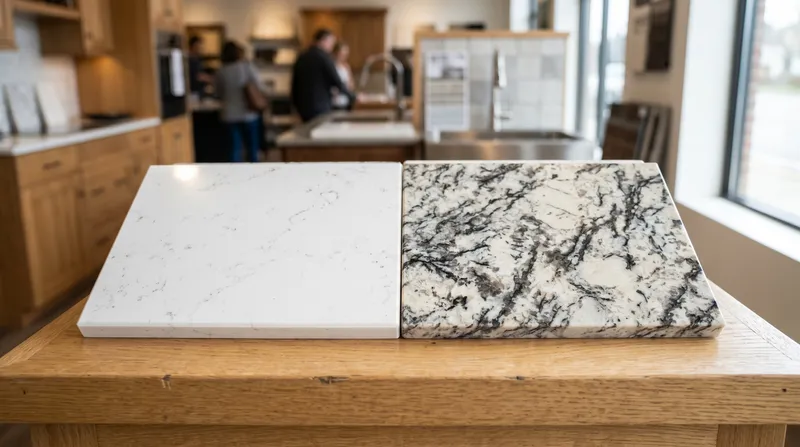
Granite is 100% natural stone, quarried in large slabs and cut to size. Every slab has unique veining and mineral patterns — no two countertops look exactly alike. Most granite sold in Malaysia comes from India, China, Brazil, or Europe, with price varying significantly by origin. Chinese granite sits at the budget end while European and Brazilian slabs command premium pricing.
Quartz countertops — sometimes called engineered stone — are manufactured by binding roughly 90–94% ground natural quartz with 6–10% polymer resin and pigments. The result is a dense, non-porous surface with consistent colour and pattern. Popular brands in Malaysia include Caesarstone, Silestone, and local options like Zenstone and AmpQuartz.
The practical difference matters most in how each surface handles Malaysian kitchen conditions — intense heat from daily wok cooking, year-round humidity above 70%, and staining from turmeric, sambal, soy sauce, and belacan.
Heat, Stain and Scratch Resistance Compared
Malaysian kitchens are tougher on countertops than kitchens in temperate countries. Between daily wok cooking at temperatures exceeding 300°C and ingredients like turmeric that stain on contact, your countertop material needs to perform under real cooking conditions — not just showroom conditions.
Heat resistance
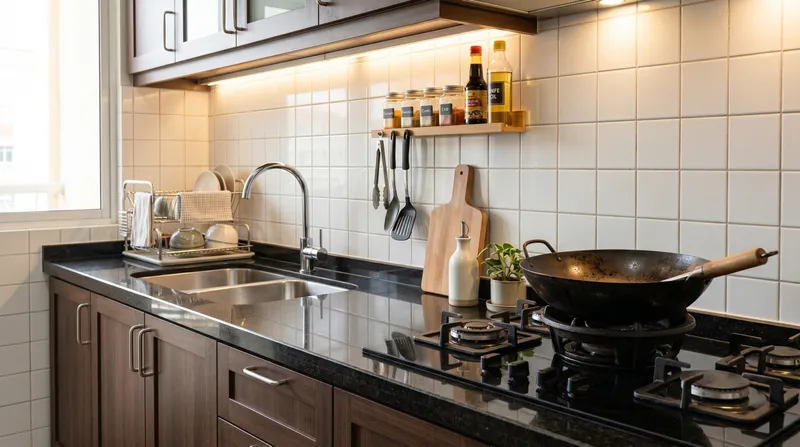
Granite wins. As a natural stone formed under extreme geological heat, granite can take a hot wok or pan placed directly on the surface without any damage. Quartz contains polymer resin binders that begin to discolour, warp, or crack at sustained temperatures above 150°C. If your wet kitchen involves serious wok cooking — and most Malaysian wet kitchens do — always use a trivet with quartz, or choose granite instead.
Stain resistance
Quartz wins. Because quartz is non-porous, liquids cannot penetrate the surface. Turmeric, curry paste, coffee, and red wine wipe off without leaving a trace. Granite is naturally porous — without proper sealing, the same spills can leave permanent yellow or brown stains, especially on lighter-coloured slabs. This is why sealed granite and prompt spill cleanup are essential in any Malaysian kitchen that handles heavy cooking.
Scratch resistance
Both perform well. Granite scores 6–7 on the Mohs hardness scale, while quartz scores around 7. In everyday kitchen use, neither material scratches easily from knives or utensils. Avoid dragging heavy cast-iron cookware across either surface and you will not have issues. For practical purposes, scratch resistance is not a deciding factor between the two.
Quartz vs Granite Countertop Price in Malaysia
Price is often the deciding factor for Malaysian homeowners. Here is what you can expect to pay per square foot, supply and install:
| Tier | Quartz (per sqft) | Granite (per sqft) |
|---|---|---|
| Budget | RM 110–180 | RM 15–50 (Chinese origin) |
| Mid-range | RM 250–400 | RM 60–150 (Indian origin) |
| Premium | RM 500–1,000+ | RM 250–600+ (European/Brazilian) |
For a typical Malaysian kitchen with 25–35 square feet of countertop area, that works out to roughly RM 3,000–14,000 for quartz or RM 500–5,000 for granite at the mid-range tier. Prices typically include fabrication, cut-outs for sinks and hobs, and basic edge profiling. Waterfall edges, L-shaped joins, and complex cut-outs add 10–20% to the total.
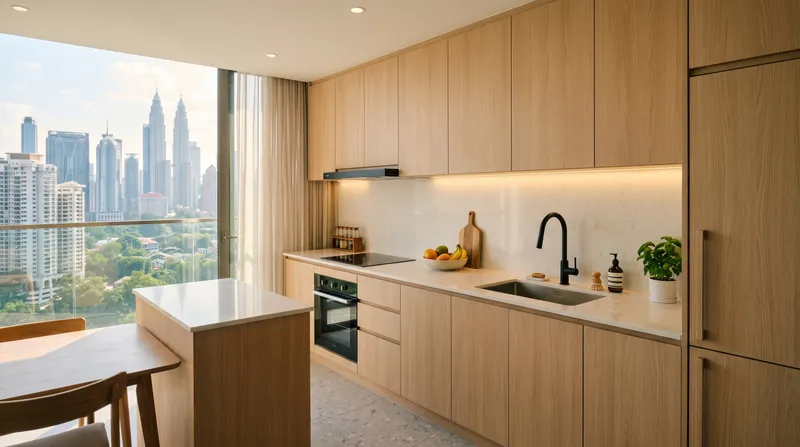
Worth knowing: Entry-level granite (RM 15–50/sqft) is significantly cheaper than entry-level quartz, making granite the go-to for budget-conscious renovations. But at the mid-to-premium range, the price gap narrows — and quartz's zero-maintenance advantage starts paying for itself over time.
Maintenance and Long-Term Durability in Malaysia's Climate
Granite requires periodic sealing. Because granite is porous, it needs to be sealed every one to two years to prevent moisture absorption, staining, and mould growth. In Malaysia's year-round humidity of 70–90%, an unsealed granite countertop can develop dark spots or bacterial growth along seams and edges. Most fabricators apply an initial sealant at installation, but you are responsible for resealing it on schedule — or hiring someone to do it.
Quartz needs almost no maintenance. Wipe it down with mild soap and water after cooking and it stays clean. Because the surface is completely non-porous, there is no risk of moisture penetrating the material, making quartz naturally resistant to mould and bacteria — a genuine advantage in tropical kitchens where humidity never drops. Just avoid abrasive cleaners or concentrated bleach, which can dull the resin finish over time.
Both materials last 15–25 years or more with proper care. Granite may chip if hit hard on an exposed edge, but chips can usually be repaired with colour-matched epoxy. Quartz is slightly more resistant to impact damage but harder to repair invisibly if a deep chip occurs.
Appearance and Design Flexibility
Granite offers natural beauty that cannot be replicated by any engineered product. Each slab features unique veining, mineral flecks, and colour variation formed over millions of years. This works beautifully in kitchens where you want the countertop to be a statement piece. The trade-off is that if you need multiple slabs for an L-shaped or U-shaped layout, matching the pattern across slabs can be difficult — and sometimes impossible.
Quartz gives you full control over colour and pattern. Manufacturers offer hundreds of options — from marble-look veining to solid colours to concrete-effect finishes. The colour is batch-consistent across slabs, which makes it easy to achieve a seamless look on large or complex kitchen layouts. This consistency is why quartz dominates in modern minimalist kitchens and open-plan dry kitchen designs across the Klang Valley.
- •Modern or minimalist kitchens — quartz in white, grey, or beige delivers clean lines and pairs well with melamine or plywood cabinetry
- •Traditional or rustic kitchens — granite's natural veining adds warmth, character, and a sense of permanence
- •Wet kitchens — granite handles direct heat from wok cooking; pair it with the right kitchen layout for proper ventilation
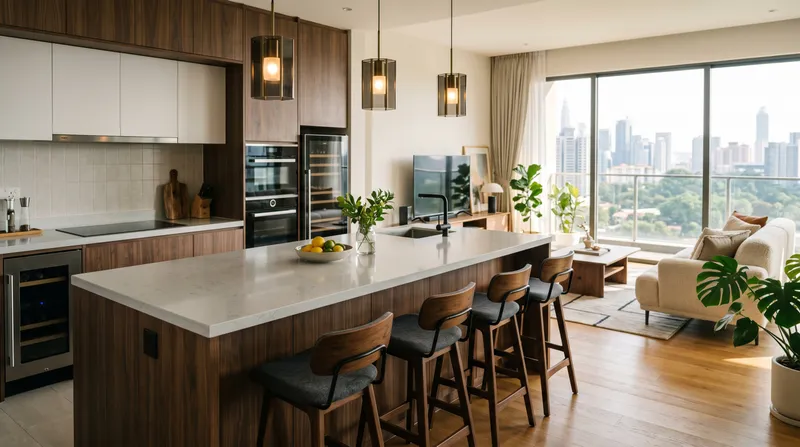
- •Dry kitchens and islands — quartz's uniform finish looks premium and resists coffee and wine stains effortlessly
- •Outdoor or balcony kitchens — granite resists UV exposure, while quartz yellows in prolonged direct sunlight
Quartz vs Granite: Full Comparison at a Glance
| Feature | Quartz | Granite |
|---|---|---|
| Composition | 90–94% ground quartz + resin | 100% natural stone |
| Heat resistance | Moderate — use trivets | Excellent — direct hot pan safe |
| Stain resistance | Excellent — non-porous | Good — needs sealing |
| Scratch resistance | Very good (Mohs 7) | Very good (Mohs 6–7) |
| Maintenance | Wipe clean, no sealing needed | Reseal every 1–2 years |
| Colour consistency | Uniform across slabs | Unique natural variation per slab |
| UV resistance | Poor — yellows in sunlight | Good — suitable for outdoor use |
| Price range (per sqft) | RM 110–1,000+ | RM 15–600+ |
| Lifespan | 15–25+ years | 15–25+ years |
| Best for | Dry kitchen, island, bathroom | Wet kitchen, outdoor, high-heat cooking |
How to Choose the Right Countertop for Your Kitchen
The best approach for most Malaysian homes is to match the material to the kitchen zone rather than picking one surface for everything:
- •Wet kitchen countertop — granite, for heat resistance during daily wok cooking and easy chip repair
- •Dry kitchen countertop — quartz, for stain resistance, consistent aesthetics, and zero maintenance
- •Kitchen island — quartz, for the seamless finish and clean look that suits open-plan living areas
- •Budget under RM 5,000 — mid-range granite gives you real stone at a fraction of quartz pricing
- •Budget RM 10,000+ — premium quartz, or consider sintered stone (RM 300+/sqft) which combines granite's heat resistance with quartz's zero-maintenance surface
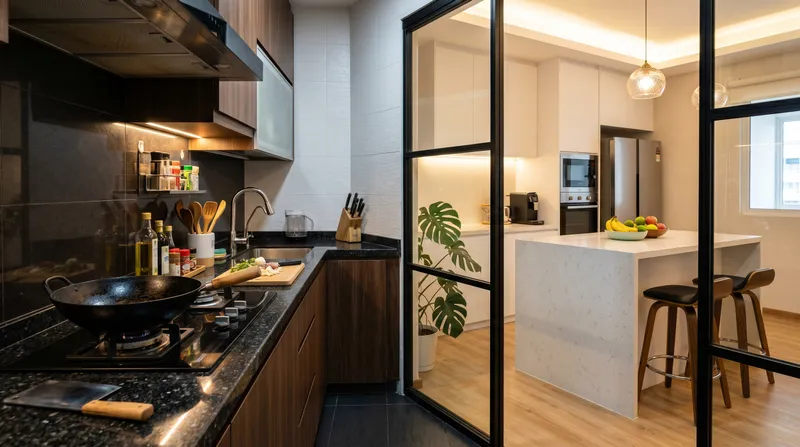
Many of the kitchens we design across Petaling Jaya, KL, and the wider Klang Valley use a combination — granite in the wet kitchen and quartz on the dry kitchen island. This dual-material approach gives you the best performance in each zone without overspending. If you are planning a wet and dry kitchen layout, it is worth discussing material zoning with your designer from the start.
Your countertop is one of the hardest-working surfaces in your home. Choose granite where heat matters most, quartz where maintenance and aesthetics take priority, and you will have a kitchen that performs beautifully for the next two decades. Need help deciding? Reach out to us for a free consultation and we will recommend the right combination for your space and budget.
Looking for an interior designer near you?
OutBox Design serves homeowners across the Klang Valley with full design-and-build services.