Best Flooring for Malaysian Homes: SPC, Vinyl, Tiles & Timber Compared
Choosing the best flooring for your Malaysian home is not just an aesthetic decision — it is a climate decision. With 75–90% humidity year-round, tropical heat, seasonal monsoon moisture, and one of the highest termite infestation rates in Southeast Asia, the wrong flooring material can warp, swell, or deteriorate within a few years. This guide compares every major flooring type available in the Klang Valley — ceramic and porcelain tiles, SPC, vinyl, laminate, engineered wood, and solid hardwood — rated specifically for how they perform in Malaysia's tropical environment.
Key takeaways
SPC flooring is the best all-rounder for most Malaysian renovations — waterproof, termite-proof, and installs over existing tiles without hacking.
Porcelain tiles remain the gold standard for wet areas like bathrooms, kitchens, and balconies.
Avoid solid timber and standard laminate in rooms without 24/7 air-conditioning — Malaysia's humidity will damage them.
Why Your Flooring Choice Matters More in Malaysia
Most flooring guides are written for temperate climates where humidity stays between 30–50%. Malaysian homes operate in an entirely different environment. Indoor humidity regularly exceeds 70% even with air-conditioning, and rises above 85% in naturally ventilated rooms. Add daily temperature swings from air-conditioned rooms (22–24°C) to non-air-conditioned spaces (32–35°C), and you create expansion-contraction cycles that stress every flooring material differently.
Termites are the other factor most homeowners underestimate. The Formosan subterranean termite is endemic across the Klang Valley, and any flooring with organic content — solid wood, laminate, even certain underlays — is a potential food source. We have seen solid timber floors in Damansara homes devastated within three years of installation despite treatment. The flooring you choose needs to survive not just your daily life, but Malaysia's climate.
Ceramic and Porcelain Tiles: The Malaysian Default
Tiles are the most common flooring in Malaysian homes for good reason — they handle humidity, water, and heat without flinching. Porcelain tiles are fired at higher temperatures than ceramic tiles, making them denser, harder, and virtually non-porous (water absorption below 0.5%). Ceramic tiles are softer and more affordable but absorb slightly more moisture. For most Malaysian homes, porcelain is worth the premium.
Homogeneous tiles are a step above porcelain — full-body tiles where the colour runs through the entire thickness, so chips and scratches are invisible. They are primarily used in commercial spaces but increasingly popular in high-traffic residential areas.
- •Waterproof — zero water absorption issues in bathrooms, kitchens, or balconies
- •Cool underfoot — naturally draws heat away from your feet, ideal for the Malaysian climate
- •Termite-proof — no organic material for termites to consume
- •Extremely durable — porcelain tiles last 20+ years with minimal maintenance
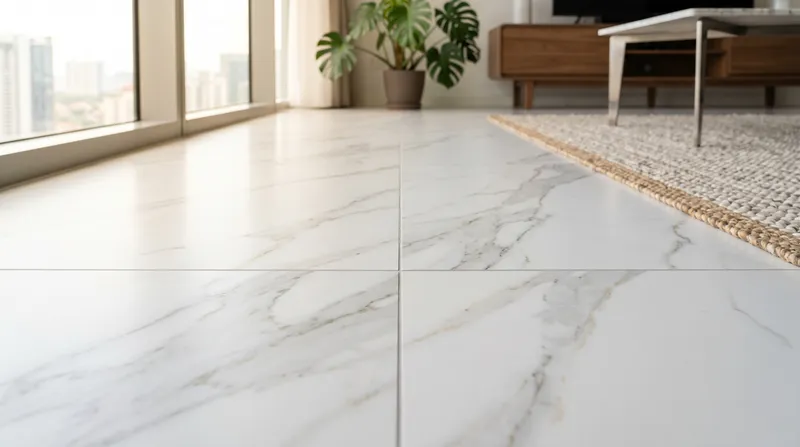
- •Wide design range — wood-look, marble-look, and concrete-look options in 60x60cm and 60x120cm formats
The downsides are real though. Tiles are hard and unforgiving underfoot — dropped items shatter, and prolonged standing causes fatigue. Grout lines attract dirt and require periodic regrouting. Installation is loud, dusty, and permanent — removing tiles means hacking, which adds RM 3–5 per sqft to your next renovation. And polished porcelain becomes dangerously slippery when wet unless you specify an anti-slip finish.
Cost: Ceramic tiles run RM 3–8 per sqft for material, porcelain RM 8–25 per sqft, with installation adding RM 11–15 per sqft. A fully tiled 1,000 sqft condo in Petaling Jaya or Subang Jaya typically costs RM 15,000–35,000 for flooring alone.
SPC Flooring: The Best All-Rounder for Malaysian Homes
SPC (Stone Polymer Composite) flooring has become the dominant choice in Malaysian renovations over the past five years. Its rigid core is made from limestone powder and PVC — zero wood content means zero termite risk and zero moisture absorption. The top layer is a high-resolution printed film with a protective wear layer that mimics timber, stone, or concrete textures convincingly.
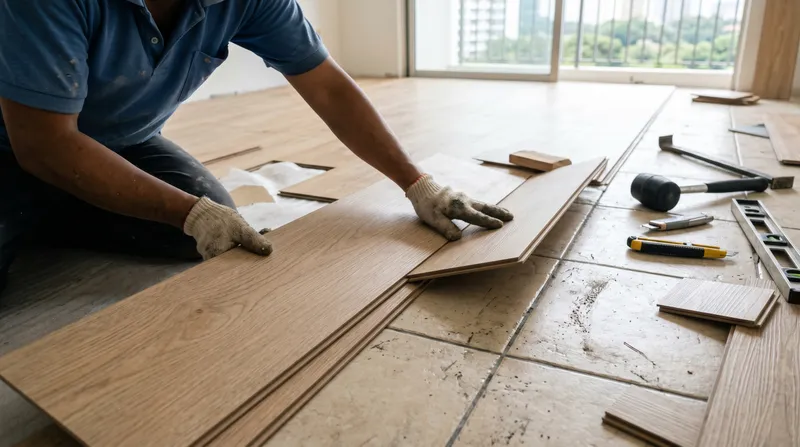
The biggest advantage for Malaysian homeowners is the click-lock installation system. SPC planks snap together over your existing floor — whether tiles, concrete, or old vinyl — without adhesive or hacking. This alone saves RM 3–5 per sqft in demolition costs and several days of renovation time. For condos in Mont Kiara or Bangsar where management restricts hacking hours, this is a significant benefit.
- •100% waterproof — the stone-polymer core does not absorb moisture at all
- •Termite-proof — no organic content means termites cannot damage it
- •Dimensionally stable — will not expand or contract with air-conditioning temperature swings
- •Click-lock installation — overlays existing tiles without hacking or adhesive
- •Softer underfoot than tiles — most SPC includes a built-in IXPE or cork underlay
- •Easy maintenance — sweep and mop with a damp cloth, no special products needed
SPC is not perfect. It cannot be refinished or sanded like timber — once the wear layer is through, the plank needs replacing. It can fade in prolonged direct sunlight near balcony doors, and quality varies enormously between manufacturers. Always check the wear layer thickness — 0.3mm is budget grade, 0.5mm is standard residential, and 0.7mm is commercial grade suitable for high-traffic homes or pet-friendly spaces.
Cost: RM 8–18 per sqft fully installed, depending on brand and wear layer thickness. A 1,000 sqft condo typically costs RM 8,000–18,000 for SPC flooring including installation — roughly half the cost of a full porcelain tile job when you factor in saved hacking costs.
Vinyl and Laminate: Budget Options with Trade-Offs
Luxury vinyl (LVT and LVP)
Luxury Vinyl Tile (LVT) and Luxury Vinyl Plank (LVP) are the flexible cousins of SPC. They are thinner, softer, and cheaper — but also less rigid and less durable. LVT is typically glue-down while LVP uses a click-lock system similar to SPC. Both are waterproof and termite-proof, making them acceptable for Malaysian conditions. Vinyl works best as a budget solution for bedrooms and living areas at RM 5–12 per sqft installed.
The thinner construction (2–4mm vs SPC's 4–6mm) means vinyl telegraphs subfloor imperfections more easily. If your existing tiles are uneven, you will see and feel the ridges through vinyl. For a smoother result, your contractor may need to skim-coat the subfloor first.
Laminate flooring
Laminate flooring looks like timber but costs a fraction of the price. A high-resolution photo layer is bonded to an HDF (high-density fibreboard) core, giving you convincing wood-look aesthetics at RM 5–15 per sqft. However, laminate has a fundamental problem in Malaysia: the HDF core is made from wood fibre.
Expose laminate to moisture — even the ambient humidity in a non-air-conditioned Malaysian room — and the edges swell, curl, and eventually delaminate. We have replaced laminate floors in Cheras and Shah Alam homes that were less than two years old because the homeowner switched off the air-conditioning during the day. Laminate only belongs in bedrooms where air-conditioning runs consistently.
Our recommendation: If your budget is tight, choose SPC over laminate. The upfront cost difference is small (RM 2–5 per sqft) but SPC will last two to three times longer in Malaysia's climate.
Timber Flooring: Beautiful but High-Maintenance in the Tropics
Engineered wood
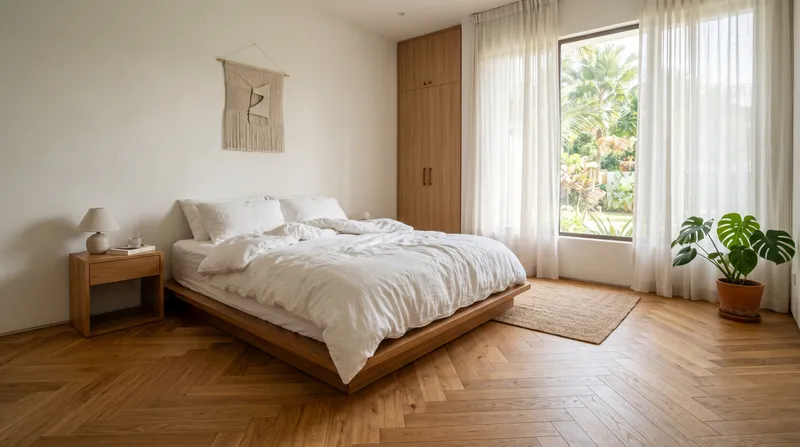
Engineered wood flooring is the practical choice if you want real timber aesthetics without solid hardwood's climate sensitivity. It consists of a thin hardwood veneer (2–6mm) bonded to multiple layers of plywood or HDF, creating a dimensionally stable plank that resists warping better than solid wood. Prices range from RM 10–25 per sqft for material, plus RM 2–3 per sqft for installation.
Solid hardwood
Solid hardwood — species like merbau, Burmese teak, and belian (Borneo ironwood) — is the premium option. These tropical hardwoods are naturally resistant to termites and offer a warmth that no synthetic material can replicate. However, solid hardwood requires meticulous climate control: acclimatisation for two to four weeks before installation, room humidity maintained between 40–60% (difficult without a dehumidifier), and periodic oiling or lacquering. At RM 25–50 per sqft for material plus RM 3–5 for installation, it is also the most expensive option.
Timber makes sense in specific situations: master bedrooms with dedicated air-conditioning, Muji-style interiors where warmth and natural grain are central to the design, or living rooms in landed properties with good cross-ventilation and dehumidification. Everywhere else, SPC with a convincing wood-look finish delivers 90% of the aesthetic at a fraction of the cost and maintenance.
Flooring Comparison at a Glance
| Type | Cost (installed/sqft) | Waterproof | Termite-Proof | Lifespan | Best For |
|---|---|---|---|---|---|
| Porcelain tiles | RM 19–40 | Yes | Yes | 20+ years | Whole house, wet areas |
| Ceramic tiles | RM 14–23 | Yes | Yes | 15–20 years | Living areas, kitchen |
| SPC | RM 8–18 | Yes | Yes | 15–20 years | Whole house (except bathrooms) |
| Luxury vinyl (LVT) | RM 5–12 | Yes | Yes | 8–15 years | Bedrooms, low-traffic areas |
| Laminate | RM 5–15 | No | No | 5–10 years | Aircon bedrooms only |
| Engineered wood | RM 12–28 | No | Varies | 15–25 years | Bedrooms, living areas |
| Solid hardwood | RM 28–55 | No | Varies | 25+ years | Aircon bedrooms, feature rooms |
Which flooring suits each room?
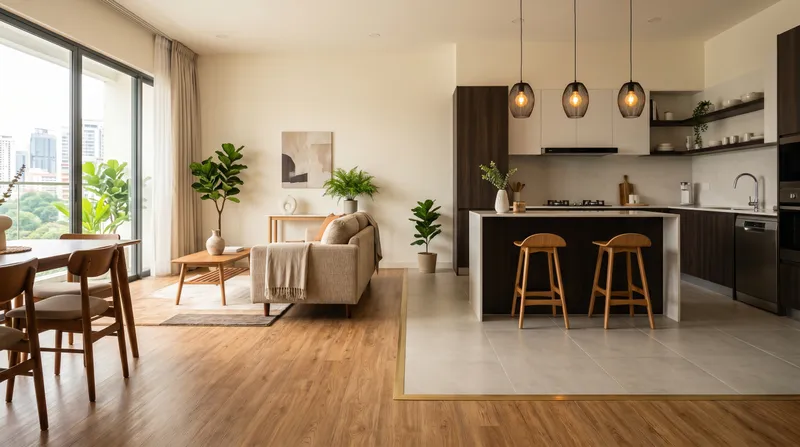
- •Living room and dining area — porcelain tiles or SPC. Tiles are more durable for heavy furniture; SPC is warmer and quieter underfoot
- •Bedrooms — SPC, engineered wood, or laminate (only if air-conditioning runs consistently). Comfort underfoot matters more here than waterproofing
- •Wet kitchen — porcelain or ceramic tiles only. Water, oil, and heat make this the harshest environment for any flooring. See our wet and dry kitchen guide for layout advice
- •Dry kitchen — tiles or SPC. SPC works if your dry kitchen stays genuinely dry with no cooking splashes
- •Bathrooms — porcelain or ceramic tiles with anti-slip finish. SPC is marketed as waterproof but standing water on seams can still penetrate over time
- •Balcony and outdoor areas — outdoor-rated porcelain or homogeneous tiles. Never use SPC, vinyl, or timber in exposed outdoor areas
How to Choose the Right Flooring for Your Renovation
Start with your room function and climate exposure, not aesthetics. Every room in a Malaysian home should have flooring that can handle its specific moisture and traffic conditions. Then narrow by budget:
- •Under RM 10/sqft — ceramic tiles for wet areas, SPC for dry areas. Avoid laminate unless the room has 24/7 aircon
- •RM 10–20/sqft — SPC for dry areas (best value), porcelain tiles for wet areas. This is the sweet spot for most Klang Valley renovations
- •RM 20+/sqft — premium porcelain, engineered wood for bedrooms, or solid hardwood for feature rooms with climate control
- •Pet owners — SPC with a 0.5mm+ wear layer or porcelain tiles. Both resist scratches from claws better than timber or laminate. See our pet-friendly design guide for material recommendations
- •Condo overlay — SPC click-lock over existing tiles saves hacking costs and is the fastest way to refresh your flooring during a condo renovation
The flooring you walk on every day affects how your home feels more than almost any other design decision. Choose for Malaysia's climate first, your lifestyle second, and aesthetics third — and your floors will look and perform beautifully for years. If you want help selecting the right combination for your space, get in touch with us for a free consultation.
Looking for an interior designer near you?
OutBox Design serves homeowners across the Klang Valley with full design-and-build services.