10 Renovation Mistakes Malaysian First-Time Homeowners Always Make

Every first-time homeowner in Malaysia walks into their renovation with optimism, a Pinterest board, and the belief that it will all go smoothly. It almost never does. After working on hundreds of residential projects across the Klang Valley, we've seen the same renovation mistakes repeated over and over — and most of them are entirely avoidable. Whether you're renovating a condo in Petaling Jaya or a terrace house in Shah Alam, these are the ten mistakes that cost Malaysian homeowners the most money, time, and stress.
Key takeaways
Most renovation disasters in Malaysia start with process mistakes (wrong payment terms, no contract, no approvals) — not design mistakes.
Always verify CIDB registration, get a written contract, and never pay more than 10–20% deposit before work begins.
Budget for electrical upgrades and waterproofing from the start — skipping these creates problems that are expensive to fix later.
Add a 30% time buffer to any renovation timeline. Permit processing, monsoon delays, and material backorders are not exceptions — they're the norm.
#1 — Skipping Condo Management Approval
This is the most common mistake first-time condo owners make in Malaysia, and it can stop your entire renovation before it starts. Every condominium has a Joint Management Body (JMB) or Management Corporation (MC) that must approve renovation works before anything begins. This isn't a suggestion — it's a legal requirement under the Strata Management Act 2013.
Skipping this step means:
- •Forfeited renovation deposit — most condos require a refundable deposit of RM 2,000–20,000 before approval. If you start without it, you forfeit the deposit and face additional fines
- •Stop-work orders — management can halt your renovation mid-progress, leaving you with a half-demolished kitchen and a contractor billing you for idle time
- •Neighbour complaints — working outside approved hours (typically 9am–5pm weekdays) triggers formal complaints that management must act on
The approval process takes 1–3 weeks depending on the management office. Submit your renovation plans, contractor details, and timeline early — ideally before your contractor's start date. Also read: Condo Renovation Guide Malaysia 2026: What First-Time Owners Need to Know
#2 — Paying Too Much Upfront
This is how most renovation scams in Malaysia work. The contractor quotes a reasonable price, requests a 60–80% deposit to "secure materials and schedule your project," then disappears or delivers substandard work with no leverage left for you to negotiate. Documented cases reported to the police and consumer tribunals show losses exceeding RM 1 million across 60+ victims in a single scam operation.
The industry standard payment structure is:
- •10–20% deposit upon signing the contract — this secures your slot and covers initial material procurement
- •Progress payments tied to completion milestones — for example, 30% after hacking and electrical rough-in, 30% after carpentry installation, and the final 20% after handover and defect inspection
- •Never release the final payment until you've done a thorough walkthrough and all defects are documented and rectified

If a contractor insists on more than 20% upfront or refuses milestone-based payments, walk away. No legitimate contractor needs the majority of your money before lifting a hammer.
#3 — No Written Contract
A quotation is not a contract. A WhatsApp conversation is not a contract. Many first-time homeowners in Malaysia treat a signed quotation as a binding agreement — it isn't. A proper renovation contract must include:
- •Itemised scope of work — every task listed with specific descriptions, not vague line items like "kitchen renovation"
- •Material specifications — brand, model, colour code, and grade for every material. "Quartz countertop" is not a specification; "Caesarstone 5143 White Attica, 20mm" is
- •Timeline with milestone dates — start date, key milestones (hacking complete, electrical rough-in, carpentry start), and handover date
- •Payment schedule tied to milestones — not calendar dates
- •Defect Liability Period — typically 12–24 months, stating that the contractor will return to fix defects at no additional cost
- •Variation order terms — how changes are priced and approved during the renovation
Without a written contract, your only recourse when things go wrong is the Tribunal for Consumer Claims Malaysia (claims up to RM 50,000) — and even then, proving your case without documented terms is extremely difficult.
#4 — Not Verifying CIDB Registration
Under the Construction Industry Development Board Act 520, any contractor performing construction or renovation work in Malaysia must be registered with CIDB. This registration isn't optional — it's the law. Penalties for non-compliance reach up to RM 50,000 in fines or imprisonment.
Yet thousands of Malaysian homeowners hire unregistered contractors every year, usually because the price is lower. When something goes wrong — and with unregistered contractors, the probability is much higher — you have almost no regulatory recourse.
How to verify
- •Visit the CIDB contractor verification portal at cidb.gov.my
- •Search by company name or registration number
- •Check the contractor's grade (G1 to G7) — this determines the maximum project value they're authorised to handle. A G1 contractor is limited to projects under RM 200,000
- •Verify that their registration is active and current — expired registrations are as good as none

#5 — Underestimating the Electrical Upgrade
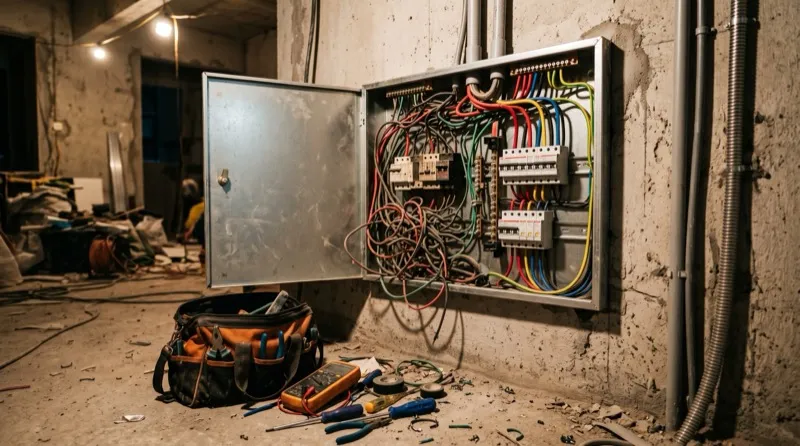
This is the mistake that can literally kill. According to the Fire and Rescue Department of Malaysia, approximately 40% of residential fires are caused by electrical faults — many of them in homes with outdated wiring that was never upgraded during renovation.
Most Malaysian homes built before 2010 were wired for a different era. Today's lifestyle demands — multiple air-conditioning units, electric water heaters, induction hobs, washer-dryers, and dozens of devices charging simultaneously — draw far more power than the original wiring was designed to carry.
What you need to check:
- •DB box capacity — older units have 30–60 amp main switches. A modern Malaysian home typically needs 60–100 amps. Upgrading the DB box costs RM 800–2,500 and is one of the most important safety investments you can make
- •Wire gauge — ensure the electrician uses the correct wire size for each circuit. Air-conditioning units and water heaters need dedicated circuits with thicker cabling (minimum 2.5mm² for power circuits, 4.0mm² for high-draw appliances)
- •Electrical point planning — decide where every power outlet, light switch, and appliance connection goes before carpentry begins. Once cabinets are installed, adding a socket behind them means tearing out the back panel
#6 — Skipping Waterproofing
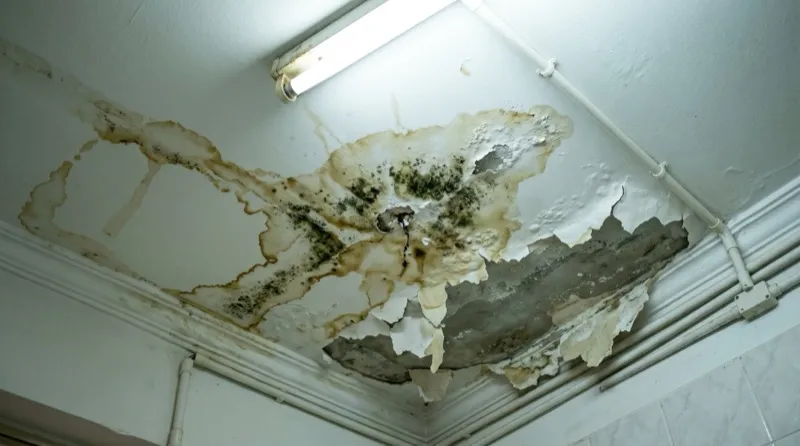
Waterproofing is invisible, unexciting, and costs a fraction of your total renovation budget — which is exactly why so many first-time homeowners in Malaysia skip it or let the contractor cut corners. The consequence is predictable: leaks that damage the unit below yours, leading to disputes, repair costs, and potential legal liability.
Industry data suggests that 90% of buildings in Malaysia experience water leakage issues at some point. The most common culprit is inadequate or absent waterproofing in bathrooms during renovation.
What proper waterproofing involves
- •Waterproofing membrane applied to the entire bathroom floor, extending at least 150mm up the walls (300mm behind the shower area)
- •48-hour flood test before tiling — the bathroom floor is flooded and checked for leaks in the unit below. Most condo management offices require photographic proof of this test
- •Waterproofing certificate — many condo management offices require a written certificate from the waterproofing contractor before releasing your renovation deposit
Don't let your contractor skip the flood test to save a day on the timeline. A bathroom leak that damages the ceiling below can cost RM 5,000–15,000 to repair — and that's before the neighbour's claim for their damaged ceiling and furniture.
#7 — Choosing Materials That Can't Handle Humidity
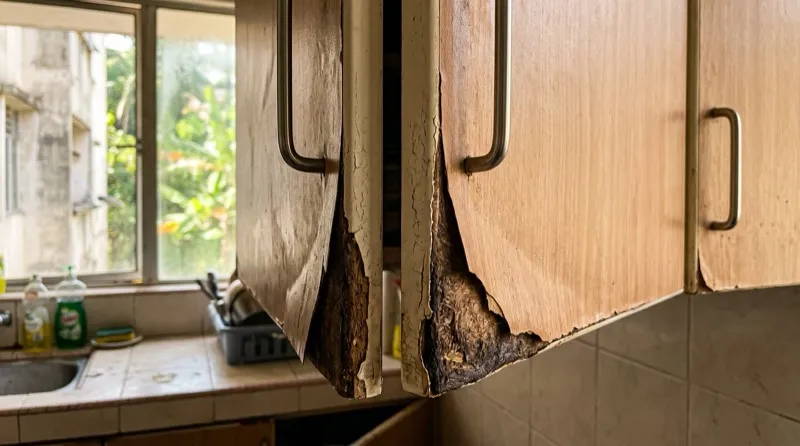
Malaysia's tropical climate means 75–90% relative humidity year-round. Materials that perform well in air-conditioned showrooms can fail spectacularly in a real Malaysian home — especially in kitchens, bathrooms, and any room where the air-conditioning is switched off during the day.
The most common material mistakes:
- •Uncoated MDF in wet areas — MDF swells and disintegrates when exposed to moisture. Use marine-grade plywood or aluminium cabinetry in kitchens and bathrooms. Also read: Melamine Wood vs Plywood: Which is Right for Your Interior Design?
- •Solid wood flooring without proper acclimatisation — timber needs 2–3 weeks to acclimatise to your home's humidity before installation. Skip this and the planks will warp, cup, or gap within months
- •Iron or mild steel hardware — hinges, drawer runners, and brackets in humid areas should be stainless steel or zinc-alloy. Standard iron hardware rusts and stains surrounding surfaces
- •Paper-backed wallpaper in bathrooms — vinyl-coated or fibreglass wallpaper handles humidity; paper-backed options peel and grow mould within a year
Ask your designer or contractor one simple question for every material choice: "Will this hold up at 85% humidity with no air-conditioning running?" If the answer is uncertain, choose the more moisture-resistant alternative.
#8 — Scope Creep from Pinterest and Instagram
You start with a clear plan: new kitchen, fresh paint, updated bathroom. Then you see a feature wall on Instagram. Then a hidden shoe cabinet on Pinterest. Then a built-in reading nook your colleague just installed. Before you know it, your RM 80,000 renovation has become RM 120,000 — and the timeline has stretched by six weeks.
Scope creep is the most common budget killer in Malaysian renovations, and it's driven by a simple psychological pattern: once construction starts and your home is torn apart, every addition feels small and urgent. "We're already doing the carpentry, might as well add the display shelf." That shelf costs RM 2,000 and delays the carpenter by three days — but in the chaos of renovation, it feels like a minor addition.
How to control it
- •Lock your scope before signing the contract — every item must be listed. If it's not on the list, it doesn't happen during this renovation
- •Set a contingency budget of 10–15% for genuine surprises (hidden pipes, termite damage) — not for new ideas
- •Use a "Phase 2" list — write down every mid-renovation inspiration. Review the list after handover. Most items will no longer feel necessary once you're living in the finished space

#9 — Not Visiting the Site Enough
First-time homeowners often assume that once they've approved the design and signed the contract, they can wait for the handover. This is a mistake. Renovation is a dynamic process — decisions happen on site daily, and problems caught early cost a fraction of what they cost once work progresses past them.
- •Visit at least once a week during active construction. Walk every room. Compare what you see against the approved drawings
- •Take dated photos of every visit — these become evidence if disputes arise and help you track progress objectively
- •Check behind the walls — electrical wiring, plumbing pipes, and waterproofing are only visible before the walls and tiles go on. Once they're covered, problems are hidden until they fail
- •Bring your approved drawings to every visit and physically verify dimensions, outlet positions, and material installations
If you genuinely cannot visit regularly, this is one of the strongest arguments for hiring an interior designer or design-and-build firm that includes site supervision as part of their service.
#10 — Timeline Optimism
Every first-time homeowner underestimates how long their renovation will take. The contractor says eight weeks, you plan to move in by week nine, and the actual handover happens at week fourteen. This isn't bad luck — it's predictable.
Common delays in Malaysian renovations:
- •Permit and approval processing — condo management approval takes 1–3 weeks. If you need local council approval (PBT) for structural changes, add another 2–6 weeks
- •Monsoon season — Malaysia's monsoon season (November–March on the west coast) slows outdoor and semi-outdoor work, delays material deliveries, and causes waterlogging on landed property sites
- •Material backorders — imported tiles, fixtures, and fittings can take 4–8 weeks to arrive. If your designer specifies an item that's not in local stock, the entire project timeline shifts
- •Subcontractor scheduling — electricians, plumbers, and tilers are often shared across multiple sites. A delay on one project cascades to yours
The 30% rule
Whatever timeline your contractor gives you, add 30% as a buffer. An eight-week renovation becomes ten to eleven weeks in realistic planning. Book your moving date, furniture deliveries, and utility connections based on the buffered date — not the optimistic one.

How to Protect Yourself
The pattern behind these ten mistakes is consistent: first-time homeowners trust the process without verifying the details. You don't need to become a construction expert, but you do need to protect yourself with documentation, verification, and realistic expectations.
- •Get condo management approval before your contractor's start date
- •Verify CIDB registration for every contractor and subcontractor on your site
- •Sign a proper contract — not a quotation — with itemised scope, material specs, timeline, payment milestones, and defect liability period
- •Never pay more than 20% upfront and tie every subsequent payment to a completed milestone
- •Budget for electrical and waterproofing from the start — these are not optional line items
- •Choose humidity-resistant materials for every room, especially kitchens and bathrooms
- •Lock your scope, set a contingency budget, and save your mid-renovation ideas for Phase 2
- •Visit the site weekly and document everything with dated photos
- •Add 30% to the quoted timeline and plan your move-in date accordingly
A good renovation doesn't just look beautiful at handover — it holds up for years because the right decisions were made before and during the build. Avoid these ten mistakes, and you'll be ahead of most first-time homeowners in Malaysia. For a step-by-step walkthrough of everything to do before demolition begins, use our first-time renovation checklist.
Looking for an interior designer near you?
OutBox Design serves homeowners across the Klang Valley with full design-and-build services.